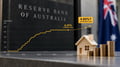
The Reserve Bank of Australia (RBA) appears poised to become the first major central bank to return to interest rate increases, as stubborn inflation and a resilient domestic economy prompt markets and major lenders to reassess the outlook for borrowing costs.
RBA governor Michele Bullock surprised markets by leaving the cash rate unchanged at 3.6% while signalling rates could rise in 2026 if inflation continues to accelerate. The comments followed Australian Bureau of Statistics data showing inflation climbed to 3.8% in the 12 months to October, up from 3.6% in September, catching policymakers off guard after the central bank only began easing earlier this year.
Commonwealth Bank now forecasts a 0.25 percentage point cash rate increase at the RBA’s February meeting, while National Australia Bank expects a total of 0.5 percentage points across two hikes in February and May. NAB has joined Citi and Commonwealth Bank in tipping a February move, reversing earlier expectations that rates would stay on hold.
Markets are increasingly aligned with that view. Traders are pricing a roughly one-in-three chance of a February hike and about 39 basis points of tightening over the next 12 months. If realised, it would mark the RBA’s shortest and shallowest easing cycle since the global financial crisis.
Ken Crompton, head of rates strategy at NAB, said there was “a very strong risk that the RBA would move first because the economy is at its speed limit,” according to a report from Financial Review.
Internationally, analysts say Australia could lead the Group of 10 into the next tightening phase. While the US, UK, and possibly Norway are still expected to ease, economists note Japan, New Zealand, Canada, and the European Union may also face renewed inflation pressure over the next year.
“[Bullock] was putting Australian borrowers on notice, particularly those with a variable mortgage, that their mortgage rates and their monthly repayments could potentially be on the way up rather than on the way down in 2026,” said Sally Tindall, data insights director at Canstar, according to SBS News.
AMP chief economist Shane Oliver told SBS News that optimism among mortgage holders had faded after three rate cuts followed 13 increases since 2022. He warned further hikes could trigger “renewed talk about a cost-of-living crisis,” given housing repayments are the largest expense for many households.
Economists caution the impact would extend beyond home loans. Andrew Grant, an associate professor of finance at the University of Sydney Business School, said higher inflation risks feeding through to prices as businesses pass on rising costs.
Finder’s Cost of Living Pressure Gauge shows financial stress rose to 77% in October 2025 from 57% in October 2019. Anglicare Australia executive director Kasy Chambers said any further increase in living costs would “affect people on the lowest incomes,” warning that “we are basically seeing poverty climbing the income ladder.”
A June Anglicare Australia report found a full-time minimum wage worker has $33 left after basic expenses, while a single parent on the minimum wage has just $1 remaining, even with government assistance.