Australians saving for their first property are stretching their budgets further than ever, with the average first-home buyer now expecting to spend $637,000 in 2025, up from $599,000 in 2024, according to Resolve Finance’s latest Generation Rent Report.
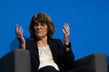
Resolve Finance managing director Don Crellin (pictured) said the survey shows that while buyers face bigger financial hurdles, they are adapting to the challenge.
“Only a year ago, first home budgets were sitting below $600,000. In some states we’ve now seen jumps of more than $70,000. Buyers aren’t walking away, instead, they’re adapting,” Crellin said.
First home budgets in Australia’s top five cities now sit well around or above $600,000, led by Sydney:
Across Australia, the average budgeted spend in metro areas is $676k, compared with $555k in regional cities and $493k in rural areas.
Crellin noted that new strategies are helping younger Australians overcome affordability pressures.
“We’re seeing more Australians use government schemes, rely on family support, or buy with others," he said. "Some are even turning to investment properties as their first step into the market. This creativity is what’s keeping first home buying alive in a challenging environment. Some banks are coming to the creativity party by factoring future rent of spare rooms into their affordability calculations.”
The survey revealed:
“Many Australians, particularly younger buyers, are no longer waiting on the sidelines," Crellin said. "Instead, they are finding new ways to enter the market, from purchasing with family or buying an investment property first, to using government assistance. Some lenders are prepared to work with buyers to consider future rental income from spare rooms when assessing affordability.”
Domain data shows this comes against a backdrop of record affordability challenges. The “deposit gap” has now climbed above eight years for a median-income household to save a 20% deposit, while new mortgage repayments consume around 54% of disposable income – the highest in at least two decades.
Among younger buyers, alternative strategies are growing. The survey found 16% of 18- to 24-year-olds plan to buy an investment property first, more than double last year’s rate. In NSW, almost one in five renters (17%) are taking this “rentvesting” approach.
By age, 65% of 35-49s, 62% of 25-34s and 54% of 18-24s plan to buy within two years; by state, Victoria leads with 62% (metro 65%, regional 56%), ahead of NSW (56%) and Queensland (54%).
State-level pressures hit buyers
From Oct. 1, the expanded 5% deposit scheme removes income caps and place limits, widening access and helping more first-home buyers avoid lenders mortgage insurance.
High rents (38%) and rising property prices (54%) remain the biggest barriers to homeownership. Cost-of-living pressures have also forced 65% of renters to delay their purchase plans.
“Today’s first-home buyers are showing resilience. They’re looking at every option, from co-ownership, to government support, to alternative entry points like investment properties,” Crellin said. “It’s no longer just about saving harder. It’s about being smarter with the resources and opportunities available and working with a broker to find solutions that ensure affordability.
“Despite the challenges, more renters are determined to make the leap into homeownership. Not surprisingly, the timing aligns with increasing government support of the Housing Australia schemes, such as the First Home Guarantee scheme, designed to support first-home buyers. These survey results highlight our first-home buyers' resilience, creativity, and confidence in the future.”
Get the hottest and freshest mortgage news delivered right into your inbox. Subscribe now to our FREE daily newsletter.