
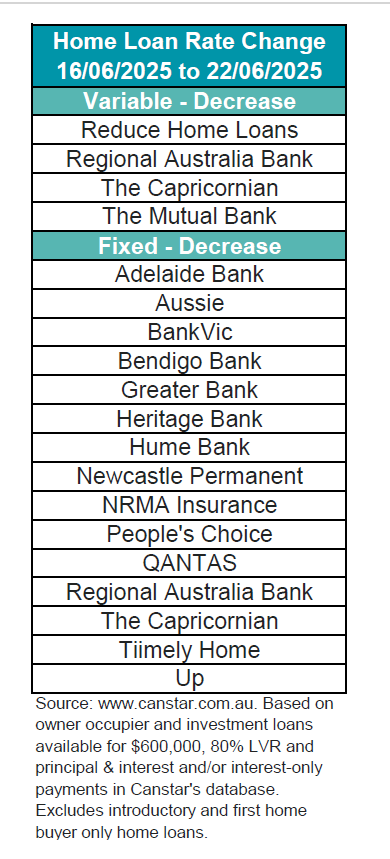
Fifteen lenders have slashed a total of 397 fixed rates for owner occupiers and investors by an average of 0.45%, according to Canstar’s latest data.
At the same time, four lenders reduced 12 variable rates by an average of 0.43%.
“While the post May-RBA variable rate cuts are now slowing down, fixed rate mortgage changes are ramping back up with 15 lenders cutting almost 400 different rates in the space of seven days as lenders continue to factor in further cash rate cuts,” said Canstar insights director Sally Tindall (pictured).
These shifts come as Australia’s housing market undergoes a broader reshuffle, with Perth, Adelaide and Brisbane overtaking Melbourne in median values. The changing landscape is creating new opportunities – and risks – for brokers and lenders navigating affordability pressures and shifting borrower demand.
The number of lenders offering fixed rates under 5% continues to grow, although major banks are yet to follow suit.
“We’ve now got more than 10 lenders offering at least one fixed rate under 5%, although none of the big banks, or their subsidiaries, are in this list yet,” Tindall said.
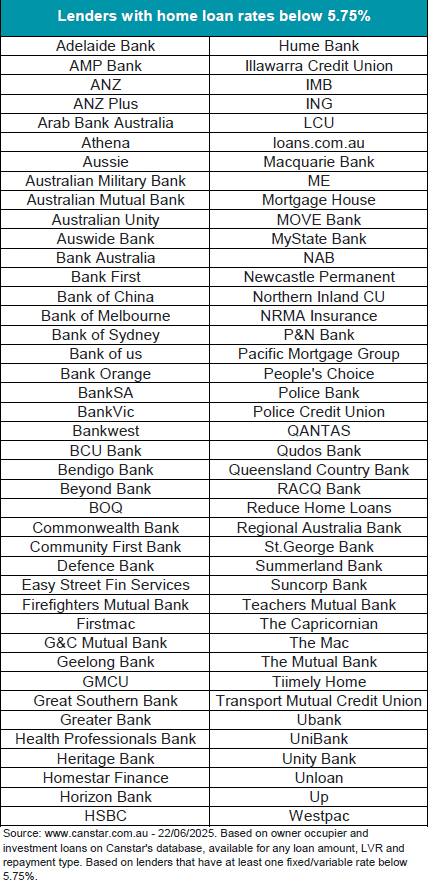
Borrowers have more sub-5.75% options to choose from, with 1,809 rates now listed below that threshold on Canstar’s database, up from 1,617 the previous week.
For owner-occupiers paying principal and interest, the average variable rate is 6.23%.
Horizon Bank offers the lowest rate at 5.24%, available exclusively to first-home buyers. Pacific Mortgage Group leads on refinance pricing with a 5.34% variable rate.
With the next RBA monetary policy meeting just two weeks away, lenders and borrowers are eyeing economic signals that may influence the cash rate.
“The next RBA Monetary Policy meeting is just two weeks away, and while last week’s Labor Force data, which saw unemployment hold steady at 4.1%, and tomorrow’s monthly consumer price index read will be important, much of the discussion will focus on the global volatilities that have been heightened by the war in the Middle East,” Tindall said.
From July 1, a range of government changes will affect household budgets. Some will ease pressure, while others may add to cost-of-living concerns.
“A pay rise for workers on the national minimum wage, a boost to parental leave pay for expecting parents and an increase to the repayment threshold for HELP debt will help many Australians make ends meet,” Tindall said.
“However, other 1 July changes will not be so well received including electricity price hikes from next week onwards, the end to the temporary $20,000 instant asset write off for small business owners and the proposed tax increase on super balances over $3 million although this one is not yet legislated.”
Tindall urges borrowers to reassess their household expenses and consider refinancing if possible.
“For households feeling the pinch, now is the time to do a stocktake of your bills to work out which ones could be better negotiated,” she said.
“The mortgage is the obvious place to start – the average variable rate for an owner-occupier is now an estimated 5.8%, however, there are well over 30 lenders offering rates under 5.5%, so why not make this your target?”