Australia's housing shortage is abating anytime soon.
Building approvals tumbled 6.4% in October, month-over-month, to 15,832, in seasonally-adjusted terms, according to the most recent data released Tuesday from the Australian Bureau of Statistics (ABS). Annually, that's a decline of 1.8%, in the 12 months leading up to October.
While September offered a brief uptick, with approvals rising 12%, the prior two months had already seen declines, underscoring the deepening housing crisis. October painted an even darker picture: private-sector dwelling approvals, excluding houses, plunged 13.1% to 6,253, while private-sector houses slipped 2.1% to 9,251.
"The upward momentum looks to be slowing," Harry Ottley, an economist at Commonwealth Bank (CBA), told Australian Broker. "Our broader message would be that [housing approvals] have improved quite a bit from the lows we had a couple of years ago. But it's still probably short of what's needed to really address the shortage at the moment. Obviously, [the approvals] are well below what the government's target currently is. And with rates not coming down as much as people probably expected them to, it probably does cap some of that upside for building approvals as well."
The economist added that September's rise likely wasn't triggered by any one driver. "It's just very volatile," he said.
By state, October's results were mixed. Victoria, New South Wales and Tasmania had double-digit declines in total dwelling approvals: -24.7%, -20.6% and -15%, respectively. Meanwhile, Western Australia and South Australia had double-digit increases: up 28.1% and 11.2%, respectively. Approvals in Queensland rose a modest 2.4%.
Approvals for private sector houses declined in Victoria, NSW, South Australia and Western Australia. Queensland bucked the trend by rising 2.7% during the month.
The numbers paint a grim picture. Building approvals are falling, reversing 2024’s gains and dipping below the 10-year average. Crucially, these figures track approvals, not completed homes. Many approved projects may never be finished. Fewer approvals today mean fewer homes tomorrow, deepening Australia’s housing crisis.
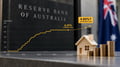
The decline in building approvals arrives amid a tug-of-war of forces in Australia’s property market. The Reserve Bank of Australia (RBA) has slashed interest rates three times this year, making borrowing easier and giving consumer confidence a lift. As a result, more buyers are eager to enter the market.
But amid Australia's thin pipeline of new homes are also rising construction supply costs, a lack of workers, rental increases and inflationary pressures.
With fewer homes coming onto the market, prices keep rising and competition intensifies, pushing some buyers out altogether, especially in capital cities and fast-growing regional hubs. Many are turning to smaller, more affordable capitals beyond Sydney and Melbourne. But even in these markets, prices are climbing faster than buyers can keep pace.
"The thing is, construction prices are so high; the materials are so high. It's outstripping the property prices that are in the secondary market," Helen Avis, director and finance broker at Perth-based Specialist Mortgage, told Australian Broker. "People aren't building as much because it's expensive. So they're trying to buy in the secondary market. But there's so much demand for those extra new places. So it's like a catch-21."
Meanwhile, Prime Minister Anthony Albanese – who was re-elected to the Labor Party in May – laid out an ambitious plan in 2023 to build 1.2 million new homes across the nation by 2029 by way of the National Housing Accord. But the latest ABS stats suggest Australia is falling short. Adding more momentum to the market are programs like the Labor Party’s Home Guarantee Scheme and Help To Buy scheme. But with supply already tight, competition is pushing prices even higher.
"I think all of that together does put some upward pressure on prices and obviously that makes it more difficult for people trying to get to the market," Ottley said.