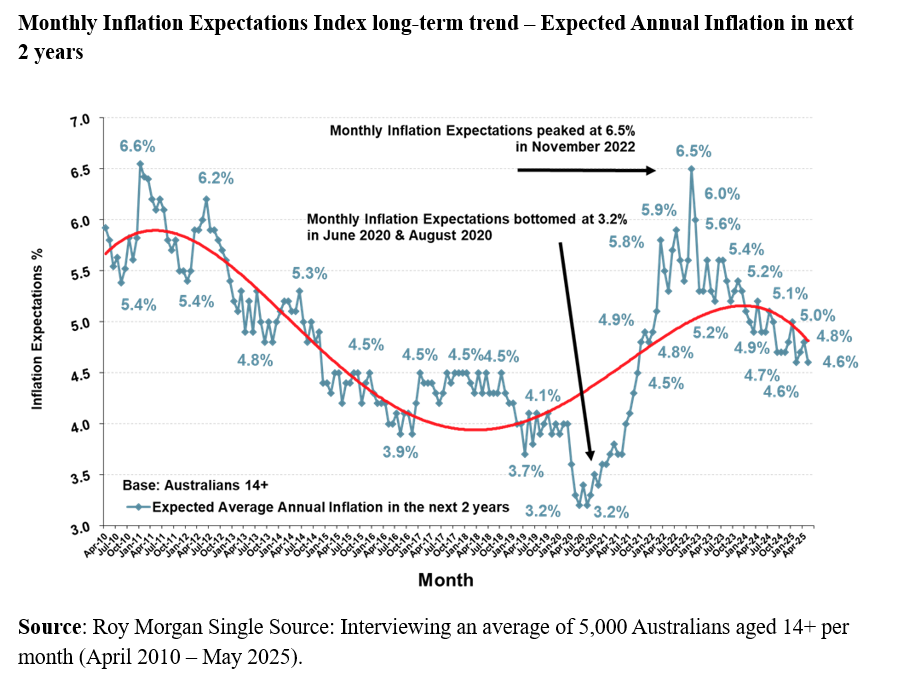
ANZ-Roy Morgan Inflation Expectations rose to 4.7% in mid-June, up slightly from 4.6% in May, amid higher petrol prices and escalating Middle East tensions.
The weekly measure has held within a narrow band of 4.2%-5.2% over the past year, averaging 4.8%.
This comes as Australia’s near-term economic outlook softens, with the Westpac-Melbourne Institute Leading Index slipping below trend for the first time since September 2023. The weaker signal reflects fragile domestic demand, with Westpac downgrading GDP forecasts and now expecting the cash rate to reach 2.85% by mid-2026.
Retail petrol prices dropped to a near three-year low in May, falling to $1.71 per litre in the final weeks of the month. However, prices rebounded in early June, climbing to $1.81 per litre – the highest since late March.
“The conflict has already led to an increase in petrol prices at the pump – now at $1.75 per litre compared to a near three year low of $1.70 per litre in May,” said Roy Morgan CEO Michele Levine (pictured).
“Further conflict will see petrol prices continue to rise with clear downstream impacts on inflation and inflation expectations going forward.”
Levine said tensions between Israel and Iran were weighing on global energy markets.
“The increase in inflation expectations in recent weeks comes as tensions in the Middle East have increased markedly – especially following the Israeli strikes on Iran which began just over a week ago,” she said.
“These strikes have led to concerns about the supply of oil and gas to world markets… and the potential for these supplies to be disrupted causing a spike in energy prices worldwide.
“As long as tensions remain high and the conflict continues, there remains the chance the confrontation between Israel and Iran will expand to a wider war in the region.”
She added that this could increase the chances of disrupted energy supplies and a “clear flow on effect to global inflation.”
Despite the uptick in expectations, official ABS CPI sits at 2.4% for the year to April – inside the Reserve Bank of Australia’s 2-3% target for the ninth month in a row.
“The good news for Australians is that the official ABS inflation estimates have continued within the Reserve Bank’s preferred target range… averaging 2.4% during this period,” Levine said.
Levine expects further interest rate easing in early July.
“Looking forward, the Reserve Bank is expected to lower interest rates in the next two weeks in early July, likely by +0.25% to 3.6%… and next meets in mid-August,” she said.
“By that time the latest June Quarterly Inflation figures (July 30, 2025) will have been released for the board to consider.
“The sharp reduction in inflationary pressures… during which official annual inflation fell from 4.1% in 2023 to 2.4% in 2024… led to the Reserve Bank cutting official interest rates in mid-February and mid-May by a total of 0.5% to 3.85%.”
In May, Queensland had the highest inflation expectations at 5.2%, while NSW recorded the lowest at 4.4%. Expectations in regional areas dropped to 4.9%, while capital cities averaged 4.5%.
“The volatility in energy prices, and inflation expectations, in recent weeks and months shows just how sensitive Australians are to changes in the prices of essential everyday goods – like petrol,” Levine said.