Australia's unemployment rate has held steady.
On Thursday, the Australian Bureau of Statistics (ABS) revealed the most recent jobs report, for the month of April, revealing that the nation's unemployment rate is 4.1%, the same as the prior month.
The steady stream of job seekers, cooling inflation, and global uncertainty are indicators of what's to come.
"That pretty much cements that [interest rate] cut," Illiana Jain, an economist at Westpac Group, told Australian Broker.
"If you've got a labor market that's starting to ease more than expected, then that does open the door for rate cuts," she added.
April's workforce participation rate also remained unchanged at roughly 67%.
Jain pointed out that wages grew .9% in the most recent findings, another sign that the RBA will cut rates, and added that the nation's labor force participation rate may be trending down.
"The unemployment rate has held remarkably steady despite these big swings over recent months, holding around 4.0%, while underemployment continues to trend lower," the economist wrote in a note. "The main focus of recent reads in the [March Labour Force Survey] LFS has been the sudden pull-back in labour force participation, from peaking at 67.2% in January to holding around 66.7-8% [in March]."
In April, 89,000 more people found jobs, according to the ABS.
Australia's unemployment rate has stayed within a 3.9% to 4.1% range for the last 16 months. Some market players are anticipating unemployment will rise throughout 2025. CoreLogic has predicted the rate will increase to 4.5%, while National Australia Bank (NAB) has forecasted unemployment will reach as much as 4.4%.
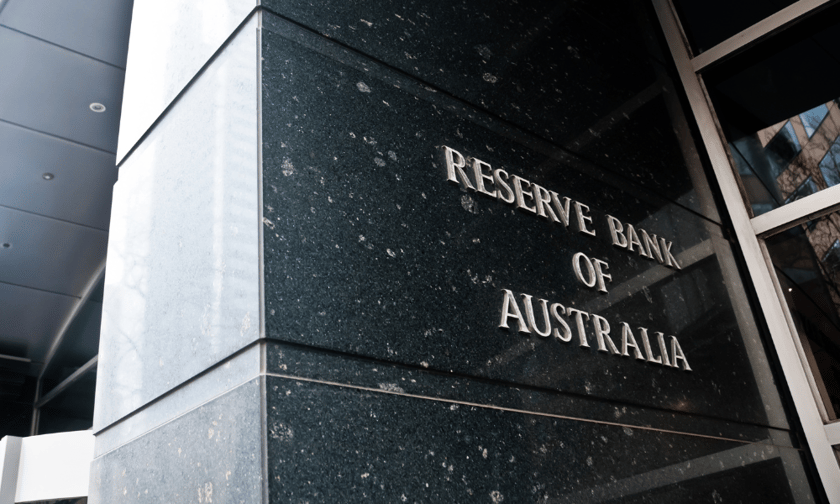
The Reserve Bank of Australia (RBA) is scheduled to meet May 19 to 20 to discuss monetary policy.
Westpac has forecast a .25% cut during the May 19 to 20 meeting.
But there are other factors too, influencing the RBA's decision, including inflation.
The nation's trimmed mean inflation fell to a three-year low during April's consumer price index (CPI) reading. But low unemployment rates could contribute to rising inflationary pressures, potentially complicating the RBA's decision-making process.
The central bank will also have to consider the global environment, including recessionary fears, volatile and US President Donald Trump's escalating trade wars.
"That's the challenge for the Reserve Bank at the moment," said Nerida Conisbee, chief economist at Ray White. "The conditions are just so changeable. They do need to navigate those conditions when making interest rate decisions."
With most of the market expecting a rate cut later this month, borrowing capacities are set to increase, reinforcing the nation’s already heightened sense of economic optimism.
And a housing shortage, coupled with lower interest rates, will continue to drive demand in the housing market.
For brokers, the combination of a housing shortage and anticipated rate cuts spells both opportunity and urgency. As borrowing power increases and buyer confidence strengthens, demand for home loans and refinancing is expected to surge. Brokers are well-positioned to capitalize, offering tailored lending solutions to clients eager to secure property in a competitive market. At the same time, navigating lender policy changes and helping clients move quickly amid limited housing supply will be critical. In this climate, brokers who can act swiftly and offer strategic advice stand to gain the most.