As Prime Minister Anthony Albanese begins a second term following Labor’s sweeping election victory, the housing market is bracing for a new wave of policy-driven change. Backed by an ambitious agenda that places housing affordability at the forefront, the government is preparing to expand its support for first-time buyers — a move likely to ignite stronger demand in an already heating property market.
“Economic fundamentals suggest this policy is likely to drive price growth in the short term,” wrote Nerida Conisbee Ray White’s Chief Economist earlier today. “The Productivity Commission's research on first home buyer incentives consistently shows that measures increasing purchasing power, without commensurate supply increases, typically lead to price escalation in targeted market segments. With more buyers able to enter the market simultaneously and competing for the existing housing stock, upward price pressure becomes inevitable.”
Labor’s key housing proposal, to remove income and property price caps under the First Home Guarantee Scheme, is set to allow tens of thousands more Australians to enter the market with deposits as low as five per cent. By eliminating the need for lenders mortgage insurance, the plan drastically lowers the entry barrier to homeownership. The updated program is expected to support up to 80,000 new entrants annually, up from 50,000 under current eligibility rules.
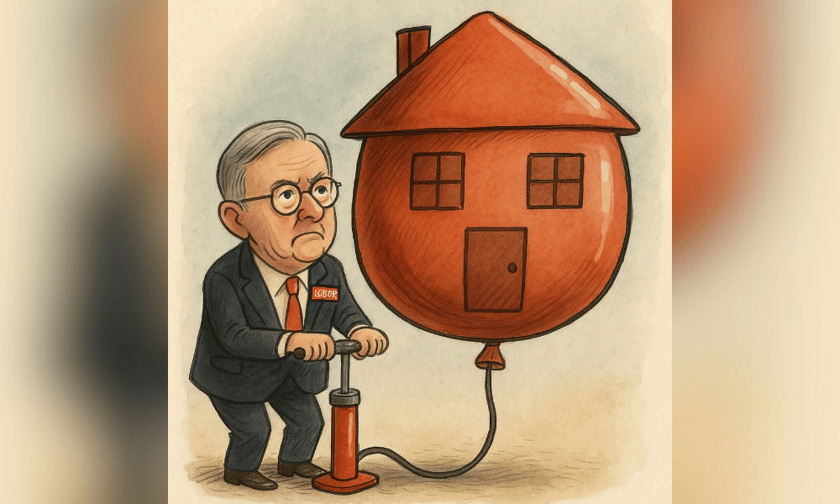
While the change is likely to be celebrated by prospective buyers, experts have flagged concerns about unintended consequences. Increased purchasing power, they warn, may fuel house price inflation if supply cannot keep pace. Louis Christopher of SQM Research suggested property prices could rise as much as 15%, calling the policy “inflationary.” Industry analysts note that without substantial new construction, such demand-driven policies typically push prices upward rather than improving accessibility.
Labor’s broader housing strategy includes a pledge to build 100,000 homes for first home buyers in partnership with state developers and continue rolling out its $10 billion Housing Australia Future Fund to deliver social and affordable housing. The government has also promised tax incentives for build-to-rent projects and financial incentives for apprentices entering construction. However, the practical challenge of rapidly boosting supply looms large. Australia has never achieved construction on the scale Labor is targeting, and current conditions — rising building costs, sluggish productivity, and stretched timelines — make those goals even harder to reach.
The housing market had already been gathering momentum before the election. Data from April showed national house prices rose 0.4 per cent, lifting the median to over $917,000. This trend was evident in nearly every major region. The anticipated interest rate cuts by the Reserve Bank, with the first expected this month, are also tipped to provide additional support for buyers, further fuelling activity.
Reactions across the mortgage industry have been mixed. Brokers generally support the expanded scheme, welcoming any initiative that helps clients overcome the deposit hurdle. Daniel O'Brien of PFS Financial Services described the plan as positive for both consumers and professionals in the sector. Others, like Helia chief executive Pauline Blight-Johnston, expressed concern about the impact on the mortgage insurance market, which could shrink as government guarantees become more prevalent.
The Insurance Council of Australia has also weighed in, warning that extending the scheme could elevate systemic financial risks and increase taxpayer exposure in the event of a downturn. They advocate for more targeted support, aimed at single parents and essential workers, rather than a universal expansion.
Meanwhile, non-bank lenders are experimenting with their own ways to reduce entry costs. Pepper Money and Bluestone Home Loans have recently announced loan offerings with waived mortgage insurance and risk fees, helping some borrowers sidestep the scheme altogether.
Labor’s re-election, which delivered a decisive defeat to Peter Dutton’s Liberal National Party and saw Dutton lose his seat to Labor’s Ali France, has given the government a strong mandate to implement its housing reforms. With Albanese vowing to make housing more affordable and healthcare more accessible, the government now has considerable political capital to pursue its agenda.
But the road ahead is complex. Policies aimed at demand stimulation are set to clash with a supply-constrained construction sector. For mortgage brokers, this means heightened activity in the near term, but also a need for cautious navigation of lending risks and property price dynamics.
As housing affordability remains a dominant issue, the effectiveness of Labor’s policy suite will be measured not just by homeownership rates, but also by its ability to temper price growth and deliver the new housing stock Australia urgently needs.