Following its second rate cut this year, the Reserve Bank is expected to keep easing interest rates through the second half of 2025 as subdued economic activity and global uncertainty weigh on recovery, according to NAB Economics.
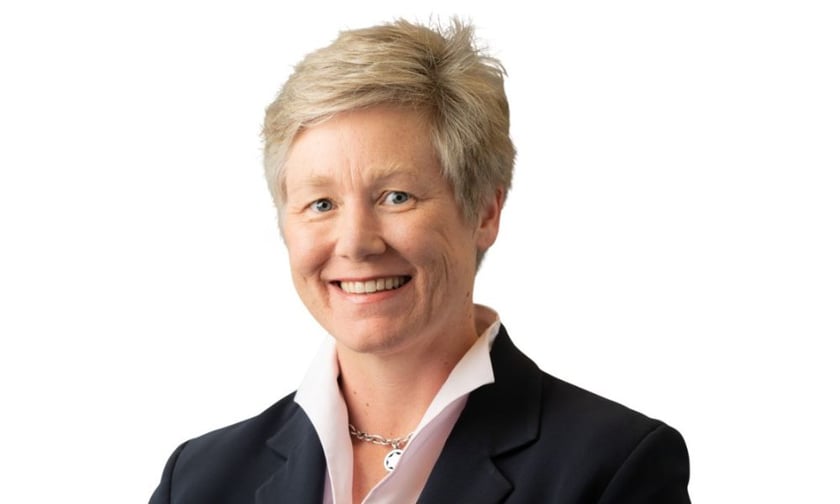
“Recent data suggests that inflation has continued to gradually moderate and that the labour market has remained resilient,” said Sally Auld (pictured), NAB group chief economist. “However, activity indicators point to the risk that growth may not be rebounding as quickly as expected.”
While tensions between the US and China have eased, NAB said the global backdrop remains a source of downside risk, particularly if trade frictions escalate again after the current 90-day tariff truce.
Australian consumers remain cautious, with spending subdued across both essentials and discretionary items.
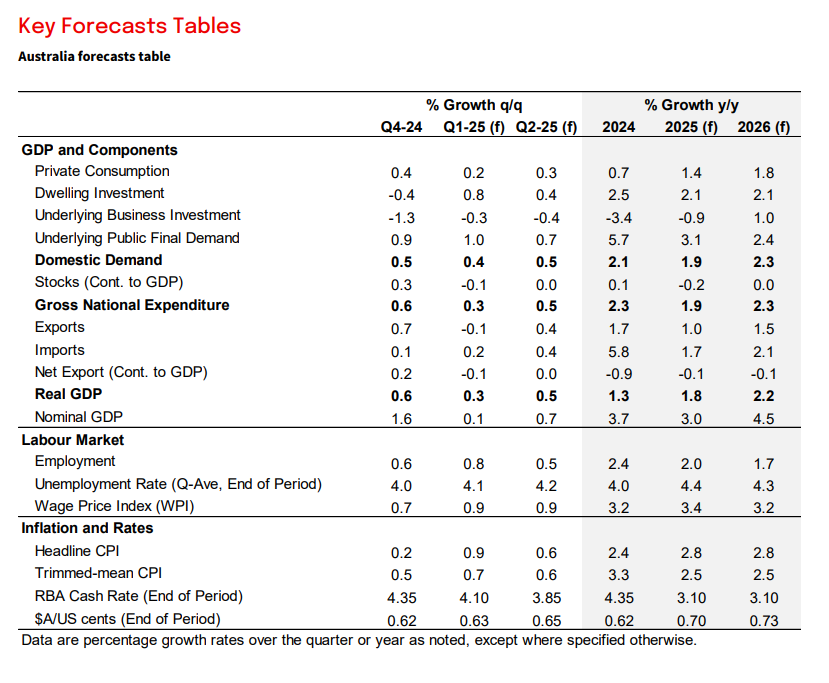
“We now expect consumption growth of 0.2% in Q1 and 1.8% year-on-year for 2025,” Auld said. “Consumers have remained cautious and price sensitive… likely to see the household savings rate creep higher.”
Queensland saw some spending volatility due to the impact of ex-Tropical Cyclone Alfred, with signs of recovery in April.
Despite a surprise 89,000 jobs added in April, the unemployment rate held steady at 4.1%, and forward indicators show hiring demand is cooling.
“The RBA appears increasingly open to [the] view… that the labour market is close to balance,” Auld said. “We expect the unemployment rate will pick up to a still healthy peak of 4.4% in the second half of 2025.”
Wages growth of 0.9% in Q1 was driven partly by public sector agreements and retention payments in aged care and early education.
NAB expects RBA to cut rates by 25bp in July, August, and November, bringing the cash rate to 3.1%.
“We now see the RBA cutting by a further 25bps… taking the cash rate back to a broadly neutral stance of 3.1%,” Auld said. “However, we no longer expect policy to move to an accommodative stance.”
While underlying inflation is back within target, growth and investment remain weaker than expected. NAB’s revised forecast pegs 2025 GDP growth at 1.8%, below RBA’s updated 2.1% forecast.
“The RBA can afford a greater focus on the employment component of the mandate,” Auld said. “The board is focused on its mandate to deliver price stability and full employment and will do what it considers necessary to achieve that outcome.”
NAB expects “subdued sentiment and global uncertainty to weigh on business investment in 2025.”
“The survey was fielded… three weeks after the initial Liberation Day driven market volatility,” Auld said. “Despite passing the trough in growth… conditions and confidence remain largely below average.”
Australia’s housing market continued to recover modestly, with NAB noting a 0.3% lift in capital city prices in April.
Dwelling approvals fell 8.8% in March, partly due to weather disruptions, and completions remain insufficient to meet population growth and housing targets.
Despite the recent tariff de-escalation, NAB warns that “high levels of global uncertainty will likely persist.”
“We still expect growth to take a step down from its 2024 pace,” Auld said, warning that a re-escalation in trade tensions could prompt the RBA to cut below 3% temporarily.