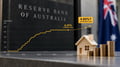
While mortgage holders and investors alike are holding out hope for another interest rate cut come November, economists warn that property prices could soar if the nation's central bank continues to ease monetary policy.
"Another rate cut would be really good news for people who've already got a property. But it's terrible news for people who don't," Saul Eslake, a Hobart-based economist and vice-chancellor's fellow at the University of Tasmania, told Australian Broker.
The Reserve Bank of Australia (RBA) plans to meet on the 3 and 4 of November to review monetary policy. Economists are divided on which direction the central bank will take.
Commonwealth Bank (CBA), National Australia Bank (NAB) and ANZ have said the RBA will likely hold until February of next year. Meanwhile others, including Eslake and Westpac, have said the rate easing cycle likely isn't over yet.
The RBA last cut the official cash rate (OCR) in August to 3.6%, the third time for the year. Another cut would boost borrowing power. But it would also intensify competition for would-be homeowners and those looking to upgrade or move in an already expensive, supply-strained market.
Nationally, home values rose 4.8%, in the year leading up to 30 September, according to Cotality, the research firm formerly known as CoreLogic. That puts the median value for the year at approximately $857,000. Meanwhile, home values in all of Australia's capital cities rose throughout the 12 months, with double-digit returns in Darwin, Perth and Brisbane.
But not everyone sees this as a positive development.
"We've got to stop regarding house prices going up as being good news," Eslake said. "[Everyone] has been squawking about the cost-of-living crisis in the last three years. And what's the biggest element of the cost of living? The cost of housing.
"When the price of petrol, groceries, airfares and house insurance goes up, people say that's outrageous and they demand the government do something about it," Eslake said. "But when the price of housing goes up, that tends to be celebrated.
"We have an odd attitude towards house prices in many ways. We tend only to look at it from the perspective of people who've already got one, rather than the perspective of people who would like to, but don't," Eslake said.
Regarding the central bank's next move, RBA governor Michele Bullock said the bank has adopted a wait-and-see approach, indicating that future policy decisions will hinge on upcoming economic data. This means inflation and employment must remain at sustainable levels, including the RBA target inflation range of 2% to 3%, before further monetary easing.
"I'm not going to predict what the interest rate is going to be in the next three to six months," Bullock told reporters after the bank's September decision to hold. "What we're focusing on [in the future] is an interest rate path that will deliver us inflation sustained with the band. That could mean a couple more reductions. It might not. I don't know at this point. And we'll look at all this again in November."
Complicating matters is the nation's unemployment rate, which reached its highest levels in four years last month. In seasonally-adjusted terms, Australia's unemployment rate rose to 4.5% in September, up from 4.2% in August, where it had held steady for the last two months, according to the Australian Bureau of Statistics (ABS). The data indicates a slight loosening of the jobs' market.
However, the June quarterly consumer price index (CPI) confirmed that inflation is trending downward. Both headline CPI and trimmed mean inflation declined over the quarter, with annual CPI easing to 2.1%, down from 2.4% in the previous period, while trimmed mean inflation dipped to 2.7%, compared with 2.9% in the prior quarter.
The ABS will release its September quarterly CPI next Wednesday, 29 October. The data provided will help shape the RBA's next move.
"That's the most crucial piece of information regarding the Reserve Bank's thinking," Eslake said.