Inflation Down Under is running hot, and the Reserve Bank of Australia (RBA) isn’t holding back.
After a two-day meeting on monetary policy, the nation's central bank opted to increase the official cash rate (OCR) by 25 basis points to 3.85%.
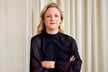
"The recent run of data gives the board a clear enough view that the underlying inflation impulse of inflation is too strong," RBA Governor Michele Bullock told reporters during Tuesday afternoon's press conference. "We have updated our assessment and outlook for the economy and concluded that the cash rate was no longer at the right level to get inflation back to target in a reasonable time frame."
The RBA's move Tuesday was largely expected after inflation came in stronger than expected in December. The latest consumer price index revealed that both headline CPI and trimmed mean inflation continue to trend upwards in the 12 months leading up to December. Headline CPI rose 3.8%, up from 3.4% in November, while trimmed mean inflation jumped to 3.4% during the same time period, compared with a 3% increase in the 12 months leading to November 2025. Meanwhile, the nation's labor market remains tight, falling to 4.1% in December and adding pressure to the RBA to consider a rate hike.
After three rate cuts in 2025, the RBA made it clear that it would not keep cutting rates until inflation was back within the 2% to 3% target band.
But even with markets forecasting a possible rate hike, mortgage holders and investors were still hoping for extra relief as cost-of-living pressures mount and property prices keep climbing.
Stoking market anxiety, Bullock flagged on Tuesday that inflation isn’t expected to cool anytime soon. "Our forecasts do see inflation above the target for the next year," she said.
"We don't just look at current inflation," Bullock continued. "We're trying to target inflation over the next one to two years, given the time it takes interest rate changes to flow through the economy. The outlook for inflation depends not just on the inflation number today, but on the strength in demand and whether the economy has capacity to meet that demand, and on global conditions as well. Based on the data we've seen and the conditions here and around the world, the board now thinks it will take longer for inflation to return to target, and this is not an acceptable outcome."
Now some market players are wondering if another near-term price hike is in the cards.
"There is unlikely to be enough hard evidence by May to prove that the initial rate hike is bringing down inflation and demand," said Belinda Allen, head of Australian economics at CBA.
Emma Lawson, a fixed income strategist, macroeconomics at Janus Henderson Investors, said her firm is also anticipating the RBA will continue to raise rates later in the year.
"Over the past month the Australian economy has show resilience and a new, potentially large, source of growth," Lawson said. "This is likely to represent the start of a series of increases over time."
Ivan Colhoun, chief economist at credit agency CreditorWatch, agreed. "One-off monetary policy moves are rare, unless there are significant global developments in the interim.
"The board considers inflation likely to remain above target for some time," Colhoun added. "[That] suggests a second move is likely in the next few months, almost certainly in May."
But Governor Bullock remained noncommittal on whether additional rate cuts were coming.
"I won't give forward guidance," she said, adding that "the strategy hasn't changed here: we're still trying to bring inflation down and keep employment as strong as we can.
"The board has taken a cautious approach. We will observe what happens in financial conditions," Bullock continued. "We're already observing some tightening in financial conditions, including through the exchange rate a bit. And we'll wait and see what some of the responses of some of the credit, housing [markets], those sorts of things.
"I'm not predicting there will be more rate rises. But I am also not saying that if inflation does remain too high that there might not be. So I am going back to that, never-ruling-anything-in-or-out phrase, I suppose, at this stage," Bullock said.
The RBA meets for its next meeting on 16 and 17 of March.