New SQM Research data confirms Australia’s rental markets have tightened sharply at the start of 2026, with conditions remaining highly constrained across most capital cities and key opportunities emerging for mortgage brokers advising investors and borrowers.
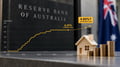
The shift comes after a rapid Reserve Bank hiking cycle through 2022 and 2023, which has pushed up mortgage rates and tightened serviceability, likely keeping more would‑be buyers in the rental market for longer.
Australia’s national residential vacancy rate slipped to 1.2% in January 2026, down from 1.4% in December, as total vacancies fell to 37,630 dwellings. The usual post‑holiday lift in listings has been rapidly absorbed, signalling an entrenched shortage rather than a short‑term seasonal blip.
Sydney’s vacancy rate is now 1.5%, with 10,987 dwellings available, while Melbourne has eased to 1.7% and 9,197 vacancies, pointing to a more stable environment after late‑2025 easing. Brisbane has tightened to 0.9% (3,339 dwellings), Perth to 0.6% (1,153 vacancies) and Adelaide to 0.8% (1,216 dwellings), cementing these as some of the most competitive rental markets in the country.
Hobart remains the tightest capital, with a vacancy rate of just 0.4% and only 112 properties available. Canberra (1.4%, 870 vacancies) and Darwin (0.8%, 195 dwellings) have also seen strong post‑summer leasing rebounds.

SQM’s advertised rents data shows renewed upward momentum. National combined rents rose 2.2% over the past 30 days and are 7.3% higher year‑on‑year, with the national combined average now at $683.26 per week. Across the capital cities, average combined rents have lifted to $779.03 per week.
National house rents were broadly steady over the month (‑0.8% rolling monthly change) but remain 7.5% higher than a year ago, while unit rents climbed 0.7% over the month and are 6.9% higher annually, underscoring persistent demand for medium‑density accommodation.

City‑by‑city, combined rents increased 1.7% in Sydney (6.6% annually), 2.2% in Melbourne (5.2% annually), 1.5% in Brisbane (8.5% annually), and 1.9% in Perth (4.7% annually). Adelaide saw a 0.4% monthly lift and 4.2% annual growth. Canberra’s rents rose 1% over the month but remain 1% below a year ago, signalling stabilisation. Darwin recorded a 1.5% monthly rise and 9.4% annual growth, while Hobart’s rents edged down 0.4% for the month but are still 10.1% higher year‑on‑year.
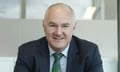
Commenting on the figures, Sam Tate (pictured), head of property at SQM Research, said: “The decline in the national vacancy rate to 1.2% in January highlights how quickly seasonal increases in rental supply can be absorbed in Australia’s current market."
“Most capital cities recorded tightening conditions, particularly Brisbane, Perth, and Darwin, where vacancy rates are again sitting below 1%," Tate said.
“With advertised rents rising in many markets early in the year, it suggests tenant demand remains strong. Unless we see a meaningful increase in new rental supply, upward pressure on rents is likely to persist through the first half of 2026.”
Get the hottest and freshest mortgage news delivered right into your inbox. Subscribe now to our FREE daily newsletter.