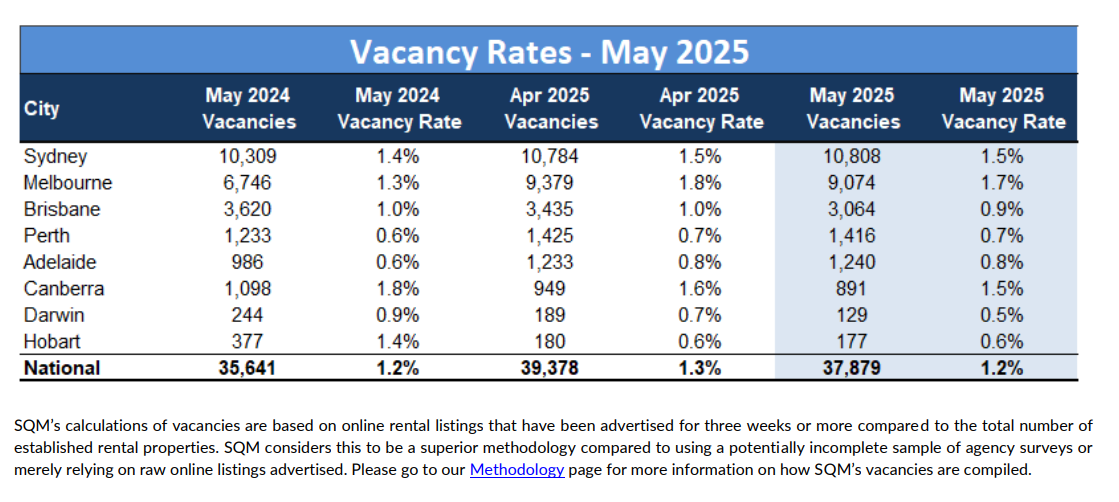
Australia’s national rental vacancy rate held firm at 1.2% in May, according to SQM Research’s latest report.
This marks a slight drop from 1.3% in April, suggesting ongoing tightness in rental supply despite a marginal annual increase in total vacancies.
The number of vacant residential properties across the country rose to 37,879, up from 35,641 in May 2024, showing a continued demand-supply imbalance.
Vacancy rates across capital cities revealed minor movements both month-on-month and year-on-year:
SQM’s Weekly Rents Index, updated for the week ending June 12, showed national rents averaging $649.18 per week. While this reflects a 0.1% monthly dip, rents are still 4.2% higher year-on-year, underlining affordability pressures in a tight market.
Rents moved in varied directions across capital cities, tracking with local supply dynamics:
SQM Research managing director Louis Christopher (pictured) noted the persistently high level of rental prices despite stabilised vacancy rates.
“Overall rental vacancies remained steady from April to May,” Christopher said. “Rental growth also remained steady but continued to be elevated given the ongoing shortage in the rental market.”
“We are likely to have ongoing elevated rents for a long period of time, until we have equilibrium between tenancy demand and rental supply. That’s not likely to happen until such time as we [see] a slowdown in population rate and a meaningful increase in new dwelling completions.”
While short-term vacancy rates showed signs of stabilisation, longer-term affordability pressures are likely to persist. Until significant new supply is delivered and migration stabilises, renters can expect limited relief in the near term, SQM reported.