
Internal migration trends across Australia are reshaping property markets, as more capital city residents opt for life in regional locations.
Driven by lifestyle preferences, housing affordability, and the rise of remote and hybrid work, this population shift is impacting growth corridors, infrastructure needs, and long-term planning nationwide, Herron Todd White reported.
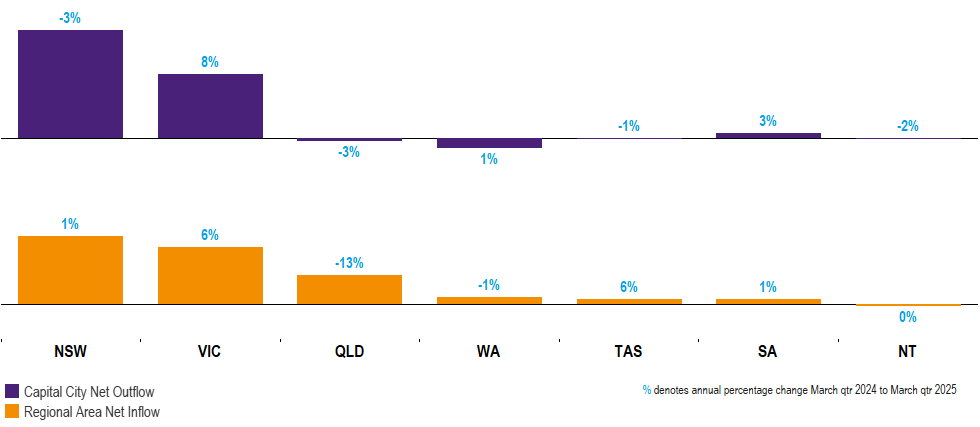
Internal migration across Australia is no longer just a pandemic-era trend. According to new research from the Real Estate Institute of Australia (REIA) and the Commonwealth Bank (CBA), regional migration is accelerating – with an 11% increase in the March quarter and a 20.5% rise compared to pre-pandemic levels.
The shift is being driven by a mix of affordability concerns, the appeal of lifestyle changes, and ongoing remote and hybrid work adoption. Regions with good infrastructure, proximity to metro hubs, and room to grow are particularly attractive.
This trend is also reflected in building activity, with the Housing Industry Association reporting a surge in new dwelling approvals across regional areas, despite a national slowdown in construction.
Meanwhile, population growth forecasts from the Centre for Population show regional Australia will account for over 25% of Australia’s net population increase over the next decade.
Sydney and Melbourne remain the biggest contributors to outbound migration.
In the March quarter, Sydney made up 64% of capital city outflows, while Melbourne accounted for 38%. Melbourne also saw the largest annual increase in departures, up 8%.
These findings come from combined analysis by CBA, Herron Todd White Research (HTW), and REIA’s internal migration reporting, which maps changing movement patterns and their impact on real estate markets.
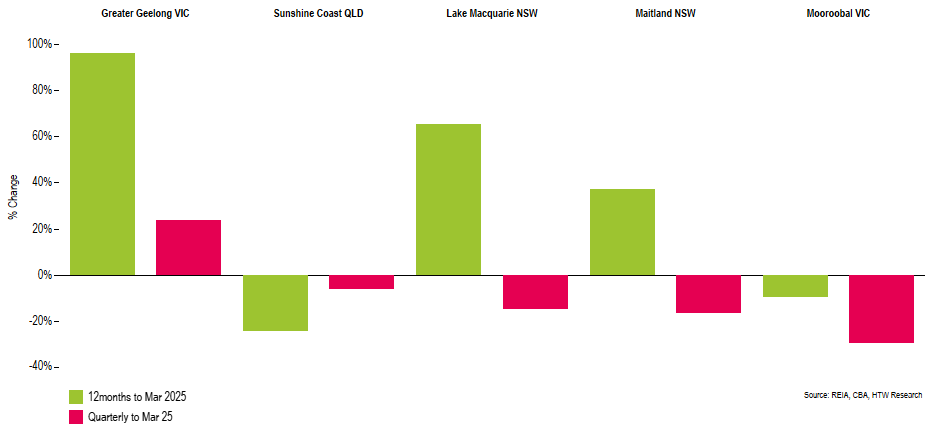
The regional winners are becoming clearer. Greater Geelong in Victoria is now the top internal migration destination, attracting 9.3% of all regional inflows and surpassing Queensland’s Sunshine Coast, which had held the lead for nine consecutive quarters.
Regional Victoria recorded one of the largest increases in total inflows at 6%, with other hotspots including Lake Macquarie and Maitland in New South Wales, which saw respective annual inflow increases of 65.3% and 37.1%.
As more people relocate, regional markets are under pressure to meet demand. Increased population is boosting local economies but also stretching existing infrastructure and housing supply.
“Residential demand is increasing in growth corridors around key regional centres, pushing infrastructure planning, housing supply, and amenity development to the forefront,” Herron Todd White said.
“Local governments, developers, and investors are paying close attention to where the people are going and why.”
The federal government’s 2024-25 budget committed $4.6 billion in regional infrastructure funding over 10 years, aiming to support housing, transport, and services in high-growth areas. However, local councils warn that current pipelines may not keep pace with demand unless approvals and funding allocations are fast-tracked.
With housing affordability declining in capital cities and lifestyle preferences evolving, regional migration is expected to continue.
“With affordability constraints in our capital cities and continued appetite for space and lifestyle, the trend toward regional migration shows no signs of slowing,” Herron Todd White said.
“As valuers working across every postcode in the country, our teams are on the ground each day, observing how these shifts are playing out in real time.”
Whether it’s housing prices, demand for new subdivisions, or infrastructure investment, internal migration is reshaping the Australian property landscape – and it’s only just beginning.