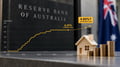
Australian building approvals rose in November, but not fast enough to solve the nation's housing crisis.
The Australian Bureau of Statistics (ABS) released its monthly building approvals data on Wednesday, revealing that building approvals nationwide jumped 15.2% in November to 18,406, in seasonally adjusted terms.
Private sector dwellings excluding houses, or units, surged 34.1% to 8,463, while private sector homes increased 1.3% to 9,458.
But after September gains and October dips, the recent surge highlights just how volatile monthly figures can be.
"It is a really jumpy series [of data]," Madeline Dunk, an economist at ANZ, told Australian Broker. "So I think that it is hard to draw too much signal from any one month. The data that we got out today is arguably a little more encouraging. But with this approval series, you do have to take all the data with a sense of caution because it is so jumpy. That one month doesn't mean a lot if we see some continued strength coming through. That would be more encouraging on the supply side.
"But at the end of the day, if you look at where approvals are relative to history, they're still pretty soft," she continued. "And particularly when you think about how many more people we have [in Australia] compared to let's say 10 years ago."
The economist added that November's building approvals were driven by apartments, which were up more than 34% in November, but down approximately 13.5% the month before. The figures illustrate how development timelines can make monthly data misleading.
"When the [ABS] says, for example, 'private dwellings excluding houses,' they were referring to units or apartments and townhouses. And that's the most jumpy part of the building approval period," Dunk explained. "Because let's say a big apartment block gets approved. That adds a significant amount of building approvals that month. And if an apartment block doesn't [get approved] and it gets delayed to the next month or whatever, it might have bigger flow and effects later. Because of the number of apartments in a huge block."
Meanwhile, by state, total dwelling approvals were mixed in November. Queensland led the pack, with total dwelling approvals up 34.2%. New South Wales and Victoria also had double digit increases, up 28.7% and 23.8%, respectively. Approvals rose 1% in South Australia, but were down -14.1% in Western Australia and -5.8% in Tasmania.
Private sector house approvals also varied across states, rising in New South Wales, Queensland and Western Australia, but falling in South Australia and Victoria.
But Dunk said under supply of homes is still an issue. "Particularly in some of the smaller capitals, like Perth or Brisbane," she said. "We are seeing that there just isn't enough stock, given what you've seen with population growth. We've seen that a lot more people have moved to those states. And the amount of homes being built in those states, or the supply of homes in those states hasn't been able to keep up."
Australia’s building approvals have been on a rollercoaster ride in recent months, reflecting the push and pull of forces in the property market. After the Reserve Bank of Australia (RBA) cut interest rates three times in 2025, borrowing became easier and consumer confidence rose, prompting more buyers to enter the market.
Yet, amid the momentum, Australia is also squeezed by a persistent housing shortage, soaring construction costs, workforces shortages, rental increases and inflationary pressures.
In 2023, Prime Minister Anthony Albanese laid out an ambitious plan to build 1.2 million new homes across the nation by 2029 by way of the National Housing Accord. But critics argue that the plan is already falling short.
And with fewer homes coming onto the market, prices keep rising and competition intensifies, pushing some buyers out altogether, especially in capital cities and fast-growing regional hubs. Many are turning to smaller, more affordable capitals beyond Sydney and Melbourne.
Furthermore, approval figures reflect the number of new buildings that have been approved to be built — not actual completions. Many approved projects may never reach completion.
"It's true: approvals don't necessarily translate into completions," Dunk said. "The fact that we are seeing the building approval series slowly trend upwards over time is positive. But it's not a significant pickup."
Lucinda Jerogin, an economist over at Commonwealth Bank (CBA), added that: "In 2026, we anticipate building approvals will continue their upward trend as the economy and real household incomes grow solidly. However, the ending of the RBA’s cutting cycle and the prospect of an interest rate hike will cap some of the upside for approvals in 2026."