
Rising rents are colliding with a budget-driven shake-up of investor lending, giving brokers plenty to discuss with landlord clients heading into the new financial year.
The latest realestate.com.au Market Insight report, powered by PropTrack, shows median weekly rents across Australia reached a record $670 in the June quarter, up 3.1% over the quarter and 6.4% year-on-year. Capital city rents rose 2.2% over the quarter and 6.2% annually to $690 a week, a $10 weekly increase on the March quarter.
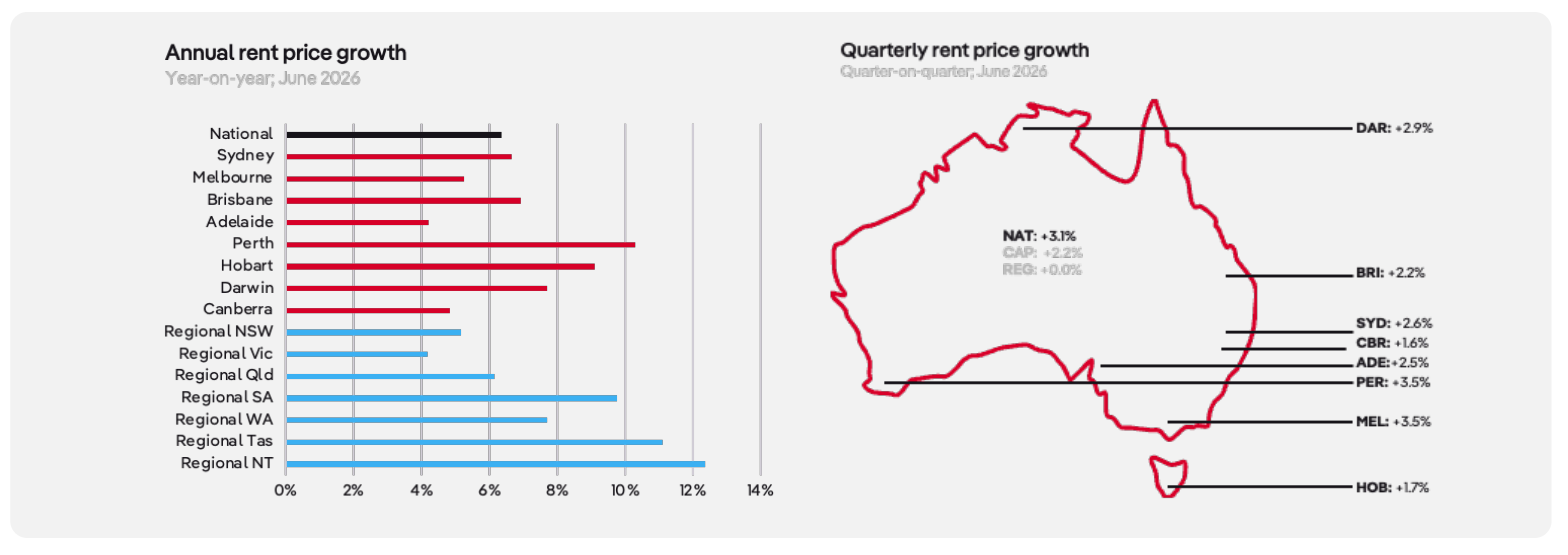
Sydney remains the most expensive capital to rent in, while Melbourne and Hobart are the most affordable; capital city rents are now $40 a week higher than a year ago, when growth had largely flattened.
House rents also outpaced unit rents over the quarter, rising 2.9% across the capitals compared with 1.7% in regional areas, a gap brokers may find useful when discussing which property types are driving rental returns for investor clients.
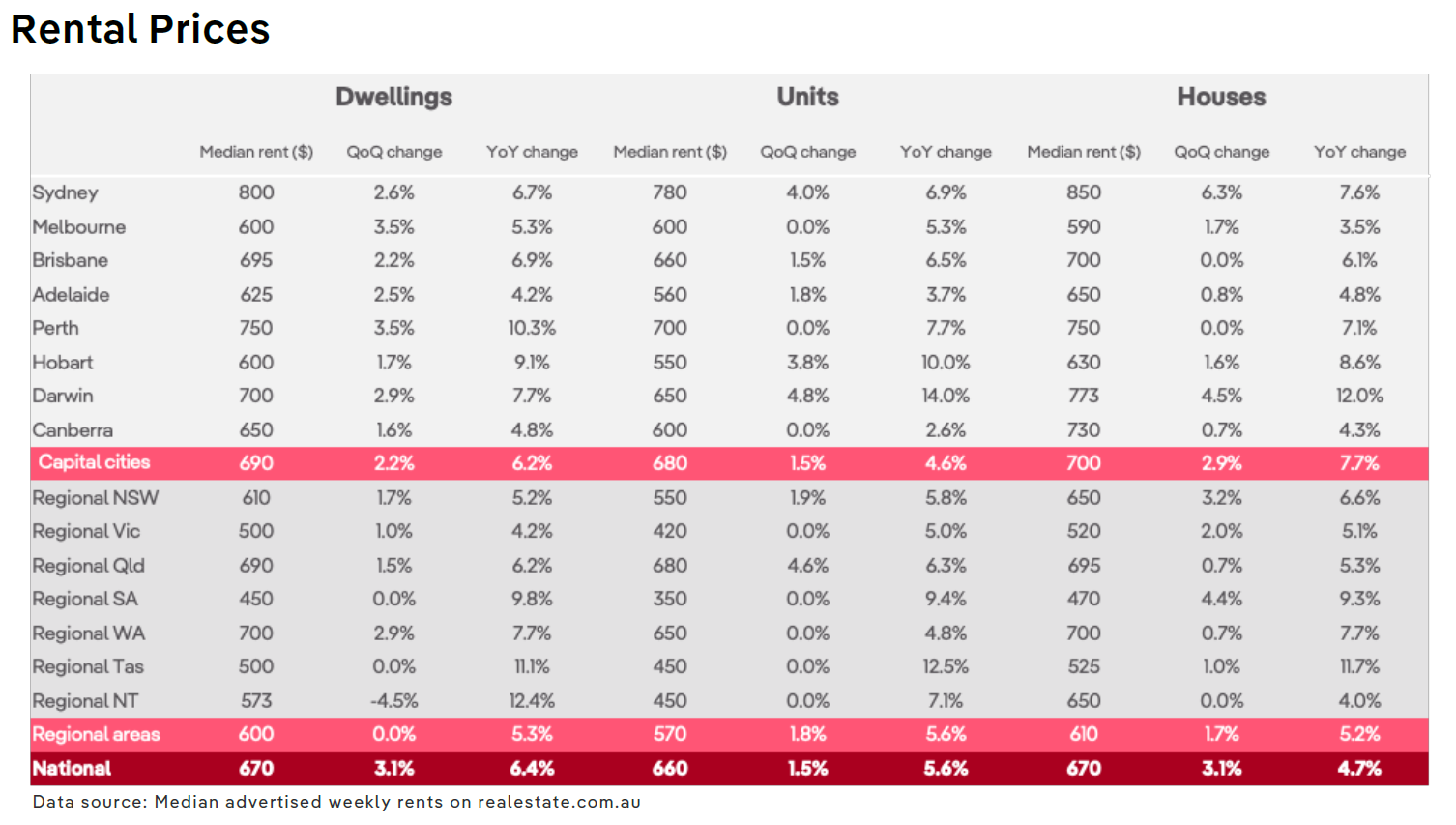
Every capital city recorded some level of rental growth over the quarter, with Melbourne and Perth leading at 3.5% each. Annually, Perth, Hobart, and Darwin posted the strongest gains, up 10.3%, 9.1%, and 7.7%, respectively.
"National median rents reached a new high in the June quarter, with widespread price growth across the capitals," said Luc Redman (pictured), economist at REA Group. "The rent increases occurred despite a small increase in the rental vacancy rate over the same period."
Redman flagged the May Federal Budget's changes to investor tax settings as a factor to watch, noting the reforms landed mid-quarter and their full effect on the rental market has not yet emerged.
Under the new law, investors who purchase established properties after budget night on 12 May 2026 are already locked out of the old negative gearing rules for that property, though the tax change itself only takes formal effect from 1 July 2027; properties held before that date remain exempt, as do purchases of new-build dwellings.
Against that backdrop, Redman's chief concern is supply.
"While the vacancy rate has edged higher, the expected decrease in investor demand due to the budget's tax changes could slow the pace of new supply, putting further pressure on rents," he said.
For brokers, a slowing pipeline of new rental supply alongside rising rents strengthens the case for existing landlord clients weighing further investment, particularly in high-growth markets such as Perth and Darwin. Regional rents, by contrast, held flat over the quarter despite 5.3% annual growth, suggesting the sharpest acceleration has eased outside the capitals.
Get the hottest and freshest property and mortgage news delivered right into your inbox. Subscribe now to our FREE daily newsletter.