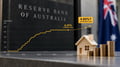
Interest rate hikes don't look to be in the cards until late 2026, or 2027, says National Australia Bank (NAB) Chief Economist Sally Auld.
"How quickly, after reaching a trough in the cash rate – somewhere in the low threes. Maybe 3.1[%], or 3.35[%], if they only do one more cut – how quickly do we think the Reserve Bank might have to start thinking about, possibly, rate hikes. At some point, maybe in the back half of 2026, or possibly early 2027," Auld said during NAB's "Commercial Broker Quarterly Economic Update" webinar.
The economist added that the major bank suspects the Reserve Bank of Australia (RBA) will indefinitely pause rates in the low 3% range, "because we think that's what the Reserve Bank would regard as a neutral setting of monetary policy."
Auld noted that the nation's current official cash rate (OCR) of 3.60% is "a little bit above neutral."
"What we don't think we'll see over the next five to 10 years is a return to rates that are well below 1.5%," she said.
Australia's central bank chopped 25 basis points off the benchmark interest rate in August, the third time the bank has eased monetary policy in 2025.
RBA governor Michele Bullock made it clear the board is in wait-and-see mode, holding out for more economic data before pulling the trigger on further rate cuts, and reaffirming its target inflation range of 2% to 3%.
The June quarterly consumer price index (CPI) confirmed that inflation continues to trend downward. Both headline CPI and trimmed mean inflation declined over the quarter, with annual CPI easing to 2.1%, down from 2.4% in the previous period, while trimmed mean inflation dipped to 2.7%, compared with 2.9% in the prior quarter. Unemployment also held steady at a low 4.2% in August.
But Bullock also suggested that stronger-than-expected consumer spending could add to inflationary pressures and delay further interest rate cuts.
Consumer spending in Australia rose two points during the last week of August, according to the latest ANZ-Roy Morgan Survey, only to fall for two straight weeks in September.
Meanwhile, as many mortgage holders and investors wait anxiously for additional rate relief amid Australia’s rising cost of living, the Big Four banks expect the RBA to hold rates steady at its upcoming meeting later this month, with a possible move in November at the earliest. Views among the banks are divided on whether that will be the final cut or the start of more to come in 2026.
NAB is forecasting rate cuts this November and again February 2026, while Commonwealth Bank (CBA) expects the easing cycle to wrap up this year.
"If I had to think about a scenario where I could be wrong on that forecast, I suspect it's probably because the Reserve Bank might not do two [rate cuts]; they might just finish with one more," Auld said. "I think that's a more likely outcome than worrying about a scenario where the Reserve Bank might have to do more than two rate cuts."
The RBA's next meeting is scheduled for 29-30 September.