
Sydney and Melbourne led Australia's post-budget housing downturn, but new data suggests sellers, not buyers, are now driving the next phase of the cycle.
Rather than listings piling up as demand cools, vendors in both cities are increasingly choosing to hold off, tightening available stock and reshaping the outlook for the country's two largest property markets, according to new Ray White analysis.
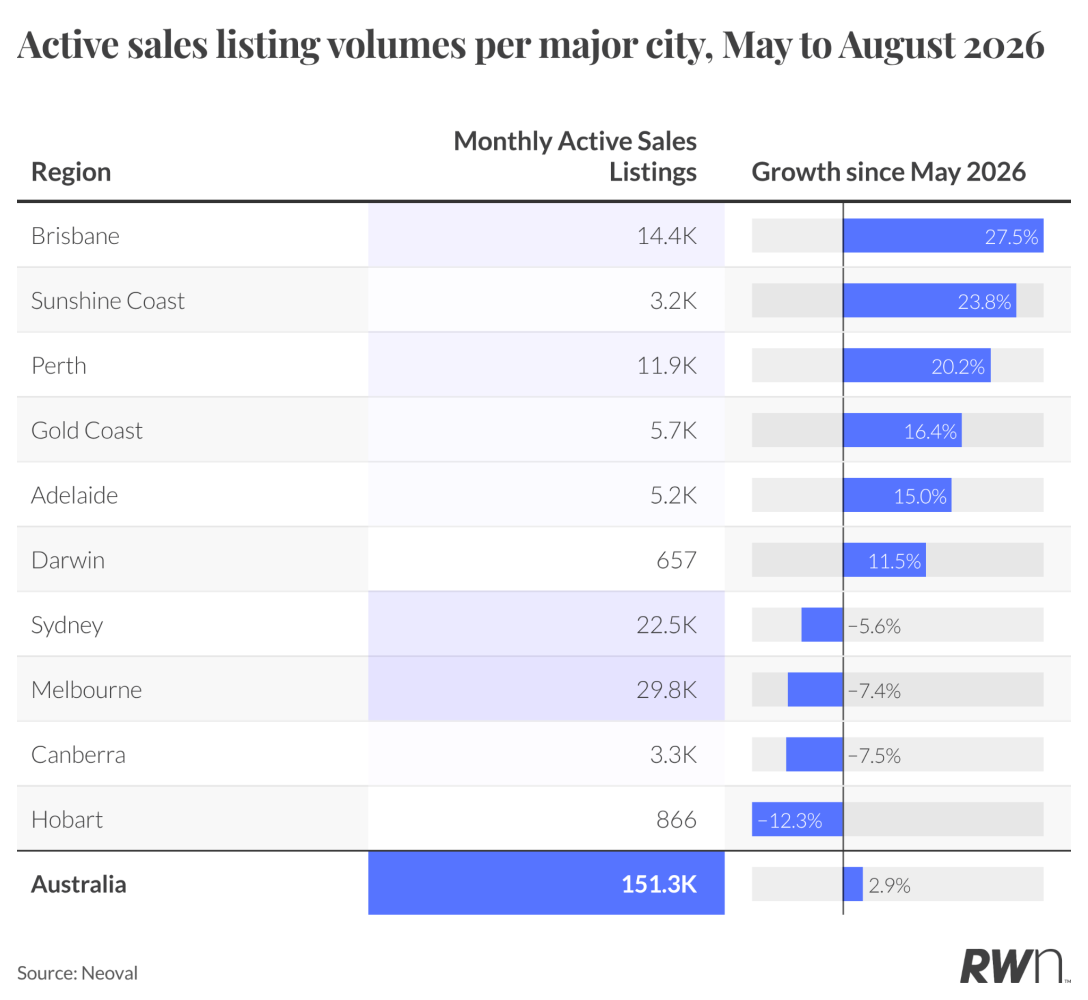
The pattern playing out in Sydney and Melbourne is not universal. New listings also fell in Brisbane (down 2.7%) and Perth (down 10.5%) between May and August, yet active listings in both cities rose sharply — up 27.5% in Brisbane and 20.2% in Perth — pointing to stock taking longer to clear rather than a wave of new vendor caution. Adelaide showed a milder version of the same trend, with new listings up only 2.4% while active stock climbed 15%.
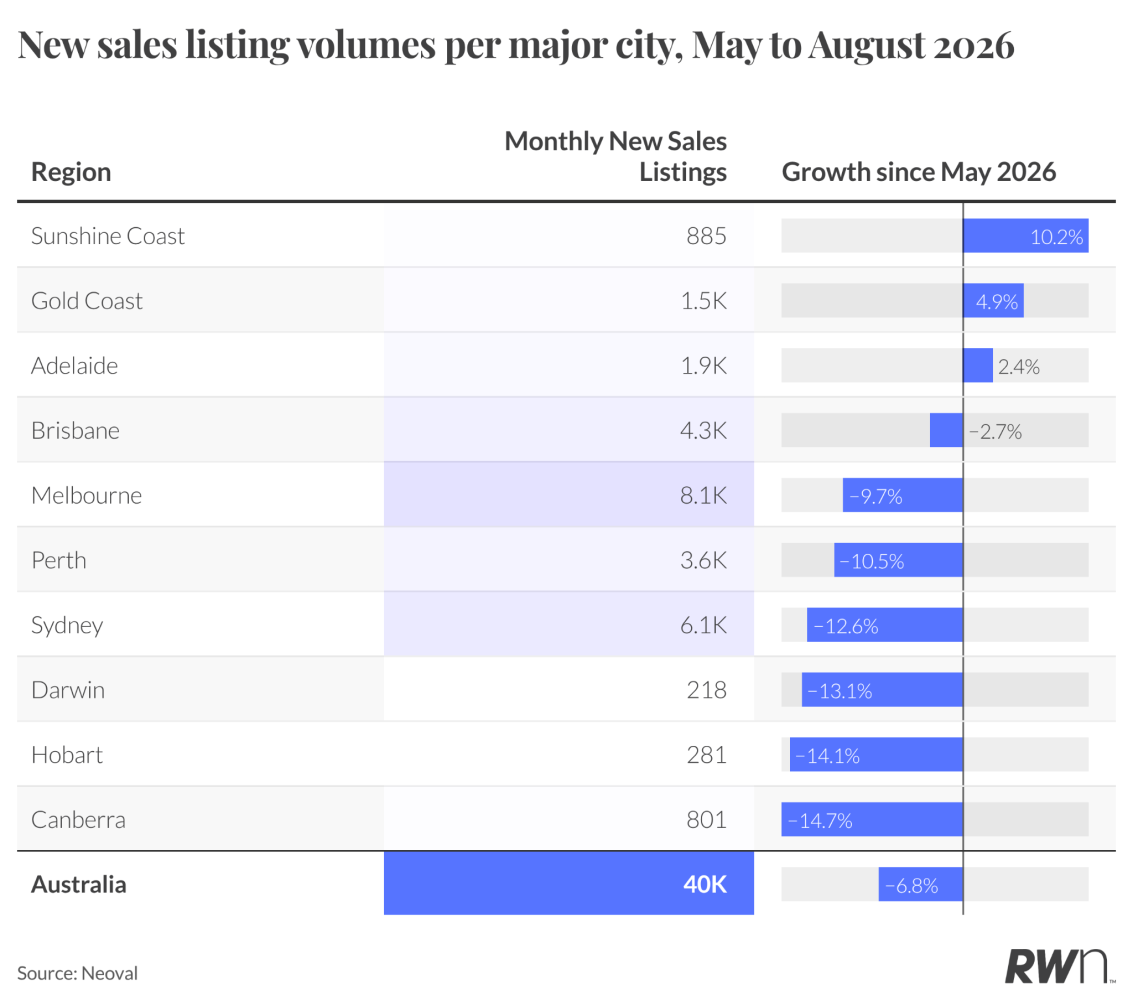
Ray White Group chief economist Nerida Conisbee (pictured) analysed new and active listing volumes since the federal budget to separate a genuine rise in seller activity from a slowdown in how quickly existing stock is clearing. New sales listings fell 12.6% in Sydney and 9.7% in Melbourne over the same period, against a 6.8% decline nationally, with Canberra recording an even steeper 14.7% drop.
Conisbee said the pattern "increasingly looks like the supply-side response to a weaker market," with owners simply opting out of selling rather than accepting softer conditions.
That pullback has flowed through to overall stock levels, with active listings down 5.6% in Sydney and 7.4% in Melbourne since May.
Conisbee noted that weaker buyer demand, driven by both budget changes and higher interest rates, "does not necessarily lead to a sustained build-up in properties for sale," since housing supply responds quickly to market sentiment.
Conisbee said the divergence leaves Sydney and Melbourne with "an important buffer against further weakness," but warned the outlook "remains fragile," since a further rate rise would cut borrowing capacity and dampen buyer demand again. That risk is not far off: the RBA's next cash rate decision falls on 29 September, with several major banks now forecasting a further hike — a scenario that would directly test the seller resilience Conisbee describes.
The shift comes even as a narrower recovery emerges at the very top of the market: Conisbee's separate analysis of open-home attendance shows early signs of renewed buyer interest in both cities' priciest suburbs specifically, a trend she has linked to the budget's changes to negative gearing and capital gains tax.
For brokers, tighter listing volumes in Sydney and Melbourne may support price resilience in the near term, even as affordability pressures continue to weigh on client borrowing capacity across both cities.
Get the hottest and freshest property and mortgage news delivered right into your inbox. Subscribe now to our FREE daily newsletter.