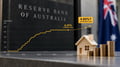
Inflation came in hotter than expected in the July Monthly CPI Indicator, with a 2.9% annual rise – well above the market expectation of 2.3% and even the top-end forecast of 2.7%.
The Trimmed Mean also jumped, from 2.1% to 2.9% year-on-year, raising concerns that inflation may be re-accelerating.
“While we accept that the headline print from the July data suggests some upside risk to our September quarter CPI estimates, we also think the result should be treated with care,” Justin Smirk (pictured), Westpac senior economist.
“Firstly, readers will remember that the Monthly CPI Indicator is so named as it is not a full monthly CPI but rather the progressive release of the partial estimates of the quarterly survey as they become available with some components only surveyed once a quarter or even annually.
“As such, we cannot simply average three months to derive a reliable quarterly result.”
The inflation surprise comes as GDP growth stays weak, with Westpac forecasting just 0.4% for the June quarter and 1.3% annualised. Modest gains reflect soft investment and only slight support from exports and services, raising concerns about rising labour market slack.
Smirk noted that the upside surprise was mainly due to a bigger-than-expected jump in electricity prices – driven by the end of cost-of-living rebates and higher default market offer rates – as well as a sharp rise in domestic holiday travel and accommodation during school holidays.
“The monthly trimmed mean has consistently run below its quarterly counterpart since 2024, and the acceleration to 2.7%yr simply brings the monthly measure into line with the latest quarterly trimmed mean,” he said.
Westpac now sees upside to its September quarter estimates, revising forecasts up to 1.1% quarter-on-quarter (2.9% year-on-year) for the CPI, and 0.7% quarter-on-quarter (2.5% year-on-year) for the trimmed mean.
“However, since these movements are largely due to timing effects – namely, the removal of power rebates and seasonal travel costs – rather than a fundamental shift in inflationary pressure, our end-2025 forecasts remain unchanged,” Smirk said.
House purchase costs rose 0.4% in July, continuing the upward trend seen through 2025.
“The July result suggests that prices are rising again, with the ABS reporting it is largely driven by project home builders increasing prices and scaling back discounts and promotional offers, particularly in some cities,” Smirk said. “This supports our view that a new positive price trend is emerging.”
Rents rose 0.3% in July, the fifth consecutive month at this pace.
“We expect this to continue to at least the end of the year, outside of October when an increase in Commonwealth government rental assistance on the 30th of September is likely to lead to a small fall in reported rents,” Smirk said.
Smirk said July recorded a bigger-than-expected jump in electricity prices, attributing it to the end of cost-of-living rebates and higher default market offer rates. He noted that reported electricity bills rose 13% for the month, while underlying power prices before rebates increased by 5.1%.
“This suggests there is scope for a further sharp increase, even without any additional rise in underlying power prices. However, we do not expect this to occur in August, and only anticipate a modest increase in September,” Smirk said.
On travel, the Westpac economist noted, “Holiday travel and accommodation prices rose 4.7% in July, driven primarily by a 7.9% increase in domestic holiday travel and accommodation, reflecting heightened demand during the July school holidays.”
Smirk said that after a thorough review of Westpac’s September quarter CPI estimate, the bank has revised its trimmed mean forecast up from 0.6% to 0.7% for the quarter, noting that the upward adjustment reflects the increased risk from rising dwelling prices.
For the full Westpac insights, read Inflation forecast revisions and Q2 GDP Partials & Forecast Update.
Get the hottest and freshest mortgage news delivered right into your inbox. Subscribe now to our FREE daily newsletter