The Australian economy is losing steam, with Westpac’s latest Leading Index showing a sharp slowdown in forward momentum.
The six-month annualised growth rate eased to just 0.03% in June, down from 0.11% in May, signalling below-average growth through the second half of 2025.
That slowdown comes amid broader signs of fragility in consumer confidence and institutional trust. According to Roy Morgan CEO Michele Levine, “Australia has become a fragile nation,” with distrust, household financial stress, and subdued spending patterns creating a “hidden brake” on recovery – even as inflation eases.
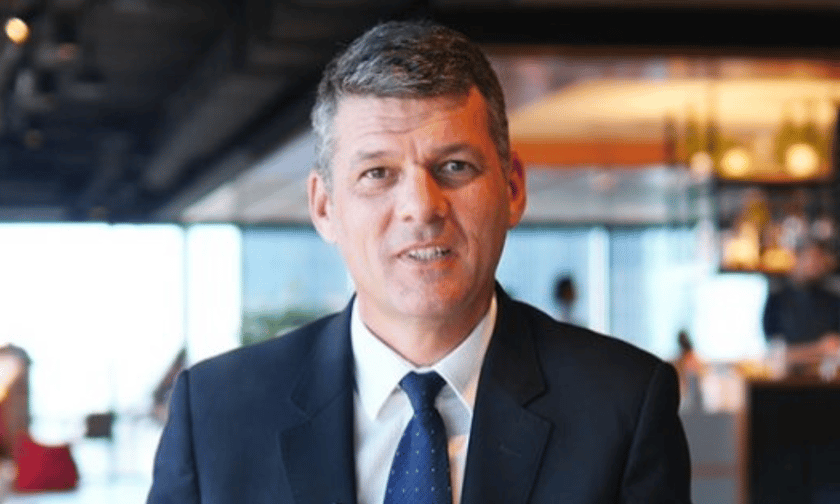
“The recovery that was gaining traction through the second half of 2024 has stalled in the first half of 2025,” said Matthew Hassan (pictured), Westpac’s head of Australian macro-forecasting.
“While the latest leading index growth rate is not weak, the current ‘around trend’ read is a clear step-down from the modestly above-trend growth momentum evident at the start of the year.”
Westpac expects the economy to expand by just 1.7% in 2025, following 1.3% growth in 2024 – both well below the 20-year average of 2%. The result would mean average growth of just 1.5% since 2022, marking a real decline in per capita terms.
The slowdown is being driven by five of the eight index components, with the biggest drag coming from softer commodity prices. Since December, weaker Australian dollar-denominated commodity prices have shaved 0.24 percentage points off the growth rate.
“This component is measured in AUD terms with weakness since the start of the year reflecting both a decline in USD prices for Australia’s commodities (-5.3%) and a firming Australian dollar (+2.6% vs the USD),” Hassan said.
Consumer sentiment and labour market indicators have also deteriorated.
“The first half of the year has also seen some added drag from a softening in total hours worked and the Westpac-Melbourne Institute Consumer Expectations Index,” Hassan said. “Combined, these two components have taken another 0.28pts off growth.”
Dwelling approvals and unemployment expectations remain soft. However, financial market indicators have improved, particularly the equity market and bond yield curve.
“The sharemarket recovery now seeing the contribution from the S&P/ASX200 unchanged since December; and the interest rate easing cycle driving a widening in the yield gap that has seen this component add 0.21ppts to growth overall,” Hassan said.
US industrial production has also helped, adding a modest 0.11ppts to the growth rate.
Despite these positives, Hassan warned that “the leading index growth rate could easily slip into negative again” if US growth weakens, financial markets sell off, or rate cut expectations fade.
The Reserve Bank left the cash rate unchanged in July, citing inflation uncertainty. However, Westpac expects that to change soon.
“The latest Leading Index update provides more evidence that growth remains sluggish at best,” Hassan said.
“Despite this, the board decided to leave rates unchanged at its July meeting due to lingering doubts about the path of inflation.”
Westpac forecasts a 25bp rate cut in August – contingent on a benign June quarter CPI update – followed by another cut in November and two more in early 2026, potentially creating a more favourable lending environment for mortgage brokers and borrowers. The Reserve Bank’s next policy meeting on August 11-12 will be a key watchpoint.
Get the hottest and freshest mortgage news delivered right into your inbox. Subscribe now to our FREE daily newsletter.