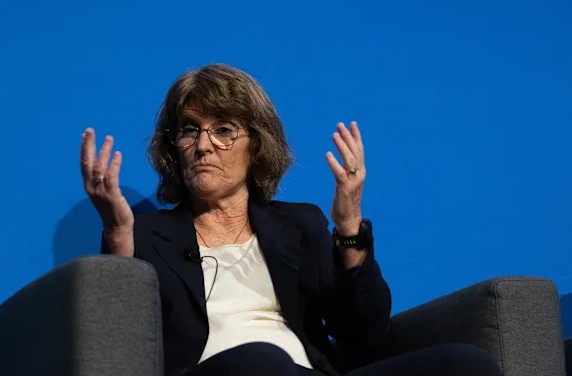
Interest rates are on everyone's mind as the Reserve Bank of Australia (RBA) prepares for its upcoming meeting on monetary policy, scheduled for this coming Monday and Tuesday, 28 and 29 September.
Earlier this month, all four of Australia’s Big Four banks brought their forecasts in line, tipping a 25 basis point rate hike at the RBA’s September meeting. If delivered, the increase would take the official cash rate (OCR) from 4.35% to 4.60%. The consensus was driven by recent comments from the RBA’s leadership team that signalled increasing concern over upside risks to inflation.
"Developments since [the August meeting] suggest that although growth in the Australian economy is slowing, some of these upside risks to inflation appear to be materialising," RBA Governor Michele Bullock said earlier this month.
"That is really where we are at the moment, thinking about where those upside risks lie and whether or not we have got tight enough policy to deliver inflation back to target," she added.
The RBA has repeatedly made it clear they will not reduce rates again until inflation is back within the target band of 2% to 3%.
The July consumer price index (CPI) didn't help tame market fears. The latest print revealed that inflation, while easing slightly, is still above the target, with headline CPI coming in at 3.5% and trimmed mean at 3.6%.
The nation's central bank has already delivered three rate hikes this year. Another increase in interest rates would put more pressure on mortgage holders and investors, many of whom are dealing with reduced borrowing capacities, elevated living costs, higher insurance premiums, new tax laws introduced by the updated federal budget and continued global uncertainty.
Policymakers left rates unchanged at both the June and August meetings, saying they wanted additional time to gauge how previous increases were affecting economic activity before deciding on their next move.
But by September, market chatter began to intensify that additional rate hikes were coming before year's end. Futures placed the probability of a rate hike in September at more than 90% by the third week of September. In the case of ANZ, the major lender is betting on rate hikes at both the September and November meetings.
With so much chatter about interest rates in the spotlight, Australian Broker asked brokers whether they expect a rate hike next Tuesday, how the market could respond if one is delivered, and which parts of the property market are likely to feel the impact most.
Founder, director and mortgage broker at Melbourne-based Brava Finance
"I think another hike is looking pretty likely. Inflation is proving stubborn and the RBA has not been quiet in voicing that further increases are on the table. That said, I think borrowers have had enough of living their lives according to RBA Tuesdays. I have started to see more people comparing their rates to other rates in the market, which is a smart move. Something they can partially control.
"[If there is a rate rise] there'll probably be another confidence wobble. But that doesn’t mean people are going to suddenly fall out of love with property. Life doesn’t wait around for the RBA to make their cash rate decision. People still marry, separate, have babies, move, invest and get sick of renting. What changes is the math: buyers may need to adjust their budget, suburb or expectations. There could potentially also be a slowdown, particularly while people digest another increase. But I think we’ll see more recalibration than retreat. People will still want to buy property; they’ll just be asking different questions. Instead of 'How much can I borrow?' it becomes 'What can I comfortably afford and how do I make this work?'
"If we do have a rate hike, I think investors will feel it most. They’ve already been hit with multiple rate increases, and recent government budget announcements have added another layer of cost and uncertainty to property investment. At some point, the numbers simply have to stack up. Another rate rise could see more investors questioning whether to buy, hold or sell. And that has a much bigger conversation attached to it around supply."
Founder and chief executive officer of Melbourne-based Blank Financial
"Another rate hike is a genuine possibility. Inflation remains the key concern, and while borrowers would certainly welcome some stability, the RBA has made it clear it will do what it believes is necessary to bring inflation under control. Another rate rise would immediately impact confidence and borrowing capacity. For buyers, every increase means one simple thing: they can borrow less and their repayments cost more. We’ll likely see some buyers reduce their budgets or delay their plans. But I don't think demand simply disappears. People still need homes; they just become much more cautious about what they can afford.
"There could also potentially be a slowdown, particularly in the short term. Another increase could take some heat out of buyer activity. But I don't see the market coming to a standstill. Rate rises don't necessarily remove buyers from the market. They change what those buyers can afford. That distinction is important.
"First-time homebuyers and highly-leveraged borrowers would probably feel a rate rise the most. For a first-time homebuyer already stretching to get into the market, even a relatively small reduction in borrowing capacity can make the difference between buying now, changing suburbs or having to wait. Existing mortgage holders with larger loans will also feel the impact directly through household cash flow. Ultimately, an RBA rate rise isn't just a headline or a number. It lands directly on Australian household budgets."
Founder and finance specialist at Melbourne-based Heart Financial
"I’m expecting another rate rise, although I certainly hope I’m wrong. Inflation remains stubbornly high and, from what we’re seeing, there is still enough pressure in the economy for the RBA to remain cautious. With the cash rate already at 4.35%, another increase would put further pressure on household budgets.
"I think the immediate response would be caution. We would see buyers reassessing their borrowing capacity and affordability, and some people may decide to delay purchasing, upgrading or investing until there is greater certainty around rates. For existing borrowers, another increase would also reinforce the importance of reviewing their loans and understanding how changes in repayments affect their broader financial position.
"We have seen previously that rate increases can have a very quick impact on consumer confidence and purchasing decisions. We have also seen how changes to government policy can influence behaviour. Another rate rise would likely add to that caution and could further slow transaction volumes and housing credit growth. The RBA has already noted that housing conditions have softened and new housing lending has declined noticeably. Investors are the segment I would be watching most closely. When interest rates rise, the numbers can become much harder to make work, particularly for highly leveraged investors, or properties with relatively low rental yields. A further increase could see some investors reassess whether a property still stacks up on a cash-flow basis.
"That said, I don't think the impact will be uniform. Investors with stronger cash buffers and diversified portfolios will be in a very different position to those relying heavily on negative gearing or future capital growth. The RBA's latest research also highlights that investors generally carry higher property debt relative to income and that investor borrowing tends to be particularly sensitive to changes in interest rates and property-price expectations.
"Ultimately, I think the biggest impact of another rate rise will be confidence. People don't necessarily stop buying, but they start questioning whether now is the right time, and that hesitation can have a meaningful impact on market momentum."