
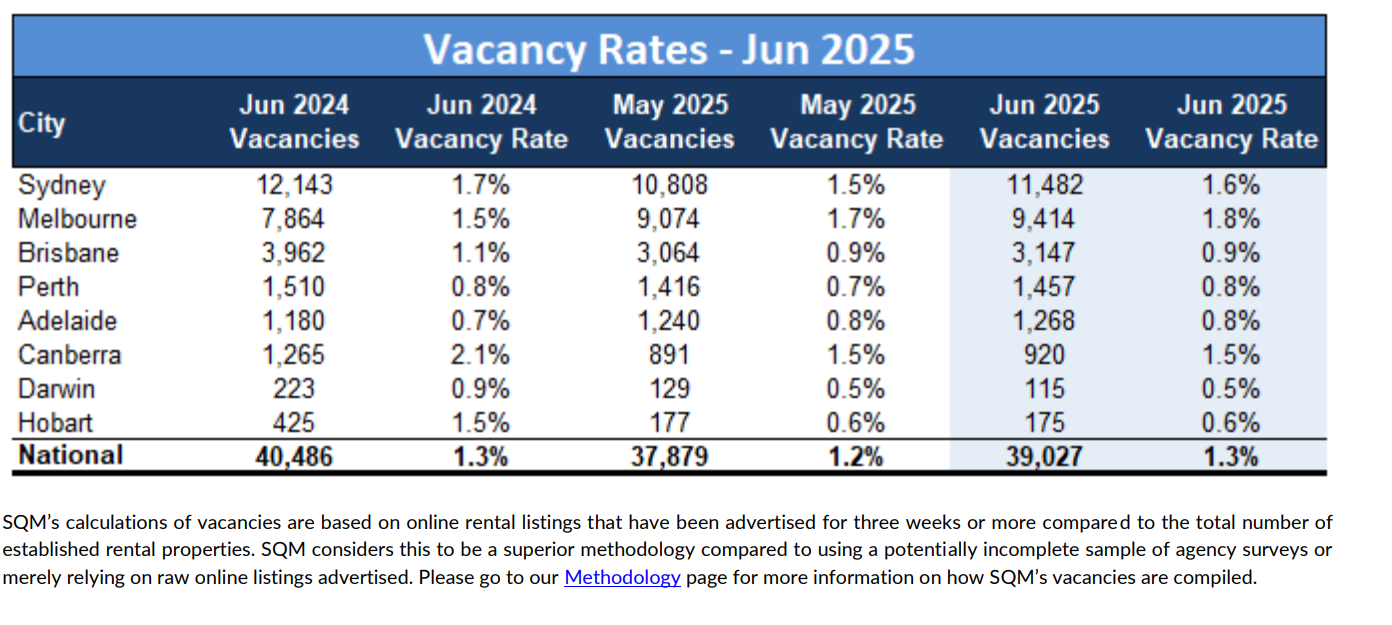
Australia’s rental market showed a minor easing in June, with the national vacancy rate rising from 1.2% to 1.3%, according to the latest data from SQM Research.
While the monthly increase hints at early signs of stabilisation, the broader picture remains one of tight supply and ongoing stress for renters.
SQM calculates vacancy rates based on rental listings that have been advertised online for three weeks or more, a methodology it considers superior to partial agency surveys or raw listing counts.
New data from the ABS supports this cooling trend, with rental inflation easing from a peak of 8.5% in December 2023 to 5.5% by April 2025. The Domain Rent Report for June 2025 also confirmed house rents across the combined capitals remained stable for the fourth straight quarter — the first time this has occurred since 2019.
Although some capital cities saw small vacancy increases, most markets remain highly competitive:
“The marginal increase in vacancies nationally should not be interpreted as a market turnaround,” said Louis Christopher (pictured), managing director of SQM Research. “Most regions still show signs of stress, and the recent spike in dwelling approvals needs to translate into physical supply before rental conditions meaningfully improve.
“June's figures suggest the beginning of a seasonal rebalancing in some regions. However, we are far from a renter’s market, especially in cities like Darwin and Hobart where vacancy rates are critically low.”
SQM Research’s Weekly Rents Index, for the week ending June 12, revealed a national average rent of $645.44, down slightly week-on-week but still up 3.3% year-on-year.
Highlights by city include:
The standout performer was Darwin, where combined rents surged over 1% in a single week and nearly 14% year-on-year, driven by extremely low vacancy. Hobart, despite a winter pullback, continues to post solid annual gains, particularly in the unit market.
For more property insights, head over to the SQM Research website.