
Australia’s once-surging rental market is showing early signs of a slowdown, according to Domain Group’s June 2025 Rent Report produced in partnership with Pepper Money.
For the first time since 2019, house rents across the combined capital cities have remained stable for four straight quarters – offering a much-needed breather for renters.
New data from the Australian Bureau of Statistics (ABS) confirms the trend, showing rental inflation has eased from a peak of 8.5% in December 2023 to 5.5% in April 2025. This moderation is most evident in capital city markets, especially within 12.5km of CBDs.
House rents in most major cities are holding at record highs but are no longer climbing.
Sydney, Melbourne, and Brisbane recorded minimal to no growth during the June quarter, marking the slowest pace of rent increases in years.
“This is the first time since 2019 that house rents across the combined capitals have remained stable for four consecutive quarters,” the report stated, highlighting a significant shift in the rental cycle.
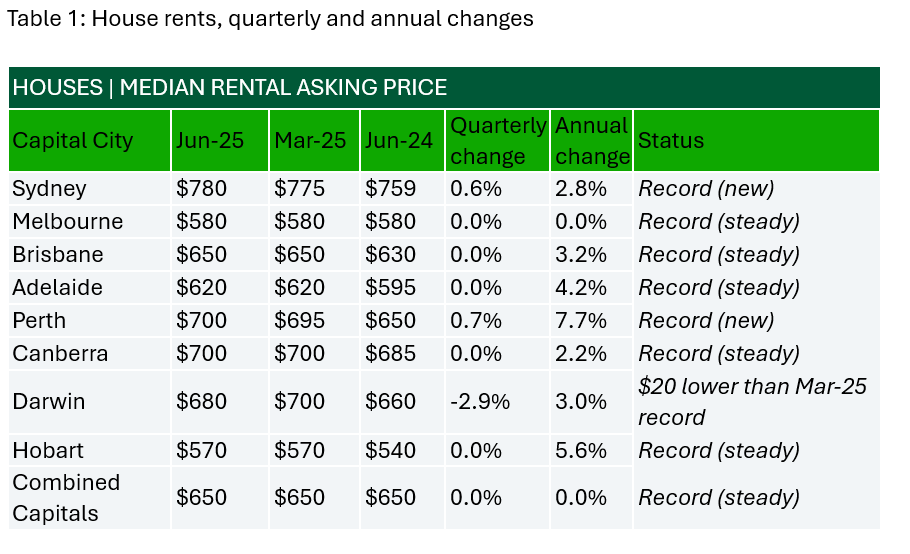
A $5 weekly increase has pushed Perth to match Canberra as the second most expensive city for house rentals, just behind Sydney. The rise in Perth underscores ongoing supply and demand pressures in Western Australia.
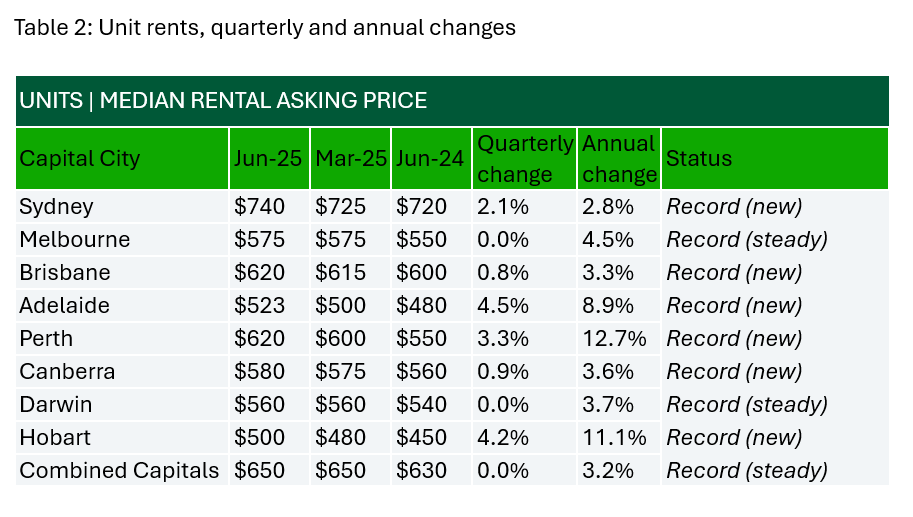
While house rents stagnate, unit rents continue to climb – reaching record highs in all capitals. Affordability constraints are prompting renters to pivot toward units, with price growth outpacing houses in every city except Melbourne.
“Renters are downsizing or choosing units to stretch their budgets, which is why unit rents are now rising faster than houses,” said Nicola Powell, Domain’s chief of research and economics.
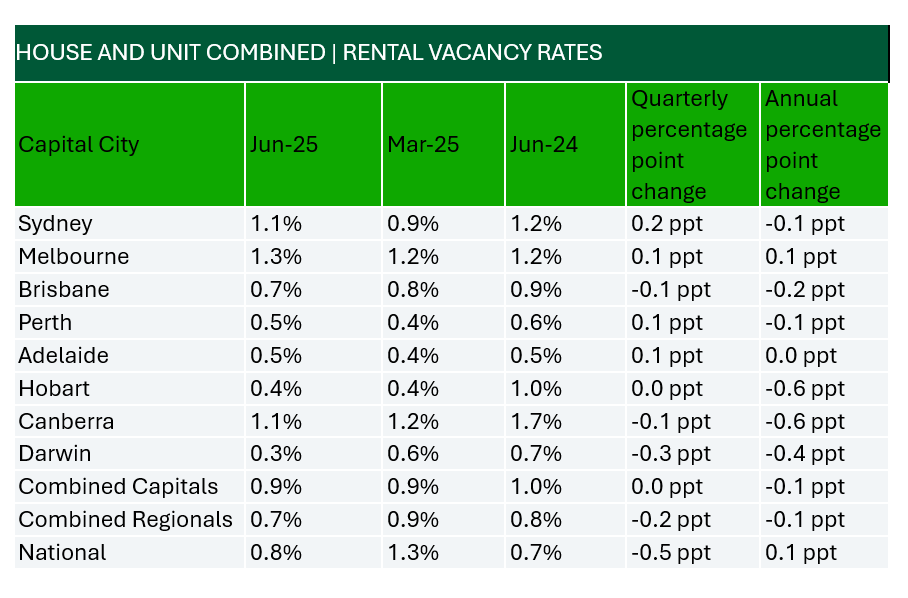
Despite the pause in rent growth, renters still face fierce competition across most markets. National vacancy rates remain below 2%, with Darwin the tightest rental market in the country at just 0.3%.
“Cost-of-living pressures have reached a tipping point. Renters are maxed out and landlords are being forced to hold steady,” Powell said. “While competition remains tough, early signs of investor activity and first-home buyer support could slowly help ease supply pressures and rebalance the market.”
The report also highlights potential advantages for both renters and investors in today’s market.
“For first-home buyers especially, the path isn’t always straightforward,” said Mario Rehayem (pictured right), CEO of Pepper Money. “Whether you're navigating variable income, self-employment, or just beginning to save, it’s important to know that a variety of alternative flexible financing options exist.
“Investing a little extra time to understand your options could put more money back in your pocket. Partnering with a broker and lender who truly understands your unique financial situation can make all the difference.”
“The data signals a much-needed pause for renters, and shows the market is shifting,” Powell said.
With affordability challenges reshaping demand and supply gradually improving, the Australian rental market may be entering a more balanced phase after years of relentless increases.
Read the full “Domain Rent Report – June Quarter 2025” here.