The total number of dwellings approved fell 8.2% in July to 15,769, according to seasonally adjusted figures from the Australian Bureau of Statistics (ABS).
“The drop in total dwellings was driven by a 22.3% fall in private dwellings excluding houses, which rose 33.5% in the previous month. The less volatile private sector houses rose 1.1%,” said Daniel Rossi, ABS head of construction statistics, in a media release.
Private sector house approvals rose 1.1% to 9,288 dwellings in July, recovering from a 1.9% fall in June. Approvals are now 0.3% higher than a year earlier.
“New South Wales and Western Australia had the strongest rise in private sector house approvals, with both states up 3%,” Rossi said. “Victoria gained 1.3% and has risen for a fourth consecutive month. South Australia was the only state to record a fall, down 6.1%.”
Private sector dwellings excluding houses dropped 22.3% in July to 5,943 approvals. The fall followed June’s sharp 33.5% rise, which had been the strongest result since December 2022.
The total value of building approvals declined 7.3% in July to $15.52 billion, reversing much of June’s 7.1% rise.
The fall was led by non-residential approvals, down 14.9% to $6.09 billion, after rising 13.5% in June. The value of total residential building approvals slipped 1.6% to $9.43 billion, reflecting a 2.1% fall in new residential work to $8.18 billion.
Renovation approvals were the exception, lifting 1.9% to a new record high of $1.25 billion.
“In chain volume terms, the value of total building work approved was $44.9 billion in the June quarter, the highest level since the June quarter of 2021,” Rossi said.
“The decline was driven by a sharper-than-expected pullback in unit approvals,” Sharma said in fresh Westpac commentary. “Private units dropped -22%mth in July after a 34% spike in June. The detail suggests high-rise projects were the main drag, while low-to-mid-rise approvals lifted. Detached home approvals rose 1.1%mth.”
She noted New South Wales saw a 24.6% fall in July, reflecting steep declines in high-rise activity.
“Vic is the only state where detached approvals are showing signs of a sustained improvement,” Sharma said, adding that low-to-mid-rise approvals remain a standout nationally.
Master Builders Australia (MBA) said the results show how fragile the recovery in home building remains.
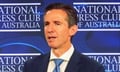
“The decline was driven by an 18.8% plunge in higher-density approvals,” MBA Chief Economist Shane Garrett (pictured) said. “However, activity in this part of the market is still 16.9% up on a year ago. Detached house approvals rose marginally (+0.6%) in July, with 9,429 houses approved – about the same as a year ago (+0.7%).”
Garrett warned progress is too slow to meet the National Housing Accord: “We’re likely to have suffered a 60,000-home shortfall during the Accord’s first year… If it stays like this, we’re in for a 265,000 deficit against the Accord’s 1.2 million target.”
MBA CEO Denita Wawn said builders were encouraged by the steady lift in detached home approvals and the strongest quarterly performance in nearly three years. However, she added that the slump in higher-density approvals was a major concern, as the Accord will rely most heavily on this segment for delivery.
“Australians need more homes, and approvals are a critical leading indicator of future supply,” Wawn said.
She added that urgent reform is needed: “We need governments at every level to fast-track planning approvals and invest in workforce capacity. Without that, we cannot bridge the growing gap between housing demand and supply.”
Get the hottest and freshest mortgage news delivered right into your inbox. Subscribe now to our FREE daily newsletter.