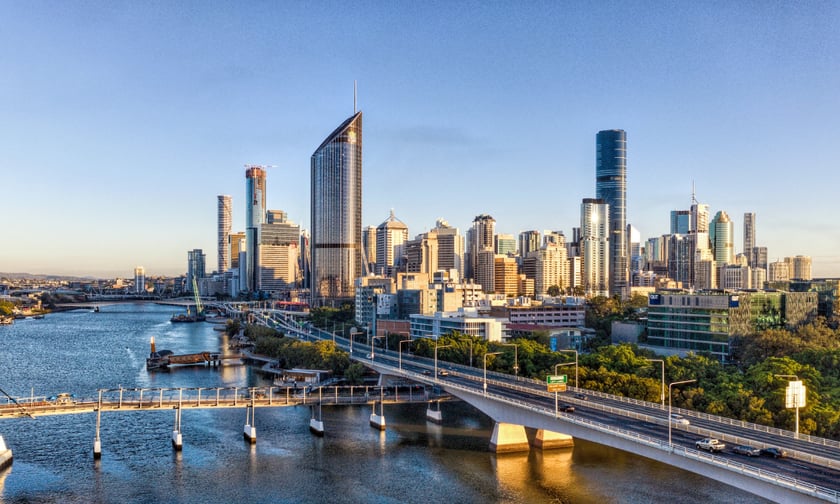
Brisbane's property market has recorded its first fall in three and a half years, with new PropTrack data showing 22.3% of Greater Brisbane suburbs posted negative growth over the June quarter as the city's median home price slipped 0.2% to $1.073 million, the Courier Mail reported.
The softening was concentrated in detached housing, with some of the city's highest-value pockets recording the sharpest dollar losses. West End houses shed 5.49%, or $109,084, taking the median to $1.88 million, while Seven Hills fell 3.94%, wiping $76,735 off its median. Woorim, Gordon Park, and Greenslopes also recorded significant declines.
Property valuer Herron Todd White pointed to federal tax reform as a compounding factor, with the firm's research finding widespread expectations that investors would exit the market following changes to negative gearing.
HTW chief executive Peter Maloney said the shift risked pushing first-home buyers into direct competition with investors for new-build stock, creating what he called a "perverse equation" for housing supply.
Buyers appear to be responding by pivoting toward more affordable stock, with units outperforming houses statewide, posting quarterly growth of 3.08% compared with 2.25% for houses, and 22.8% annual growth against 19.1% for detached homes.
That shift is also visible in search activity: PropTrack data shows year-on-year search interest climbing 42% for Ipswich's Forest Hill and 31% for Summerholm, in the outer south-east corridor, even as national search activity cooled overall.
Outside Greater Brisbane, conditions were markedly steadier, with only 7.31% of regional suburbs recording falls. The Gold Coast saw just eight of 106 suburbs decline, while Townsville posted growth in all but two of its 66 suburbs.
Real Estate Institute of Queensland chief executive Antonia Mercorella pointed to strong interstate migration as a buffer for the state, arguing the data reflects "a market plateauing rather than plummeting." She said Brisbane's outlook remained supported by "a significant supply shortfall, sustained demand pressures and strong long-term growth drivers."
REIQ's analysis showed NSW was still the largest source of interstate migrants to Queensland, contributing around 60% of the state's net gain in 2025.
Not everyone expects the current softness to last, however. Buyers agent Melinda Jennison cautioned that with lower sales volumes, "median values may show greater volatility in the months ahead as consumer confidence keeps buyers on the sidelines."
Get the hottest and freshest property and mortgage news delivered right into your inbox. Subscribe now to our FREE daily newsletter.