Monday marks the start of the Reserve Bank of Australia's (RBA) September meeting on monetary policy, with mortgage holders, investors and the broader Australian market watching closely for the central bank's next move.
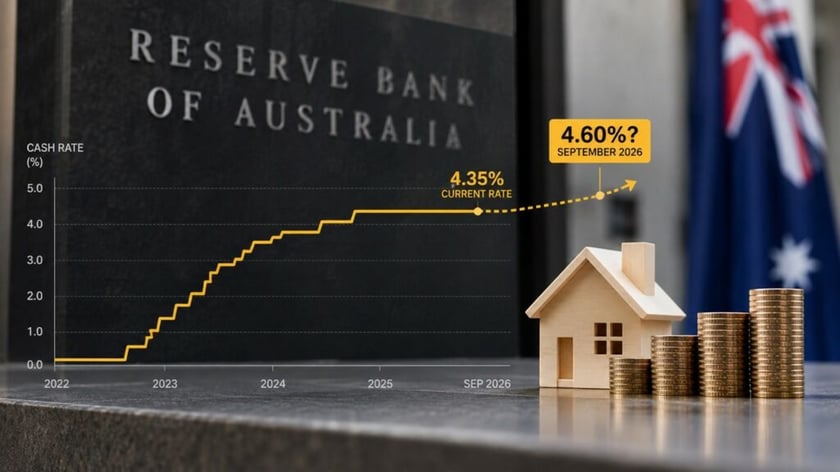
After three interest rate hikes in 2026, the official cash rate (OCR) stands at 4.35%. Another hike would put even more strain on households trying to keep up with their loan repayments, amid higher costs of living, a revised budget and tax laws, global uncertainty and general market volatility, while also carrying broader implications for the property and investment markets.
Meanwhile, all four of Australia's Big Four banks have placed their bets on a 25 basis point hike at this month's meeting.
In Australian Broker's two-part series, we asked market players for their views on what comes next, including whether they expect the RBA to hike or hold, and what either outcome would mean for the market.
Founder and director at digital mortgage comparison platform Rateseeker
"I'm expecting a 0.25% interest rate hike. The inflation data released in late August came in hotter than expected, and that's turned the tables on market expectations. I expect the RBA to follow suit to keep underlying inflation from becoming entrenched. Given how quickly expectations have shifted, this won't catch the market on the back foot the way a surprise hike usually does. Borrowers who follow the news closely will already have seen the writing on the wall. That said, a lot of everyday homeowners haven't clocked the shift yet, and for them, it'll land hard. Rather than outright panic, we're expecting a genuine surge in refinancing enquiries as people look to shore up their finances.
If rates increase, we can expect the property market to hit a speed bump, at least in the short term. Buyer confidence usually takes a hit after a hike, even a well-signaled one. Because it forces people to go back to the drawing board on what they can actually afford. I'd expect softer auction clearance rates and a lull in new loan applications through October as buyers take a breather to reassess. Whether that turns into a prolonged slump or just a short-term blip depends on whether the board signals this as a one-off adjustment or the start of another tightening cycle.
First-time homebuyers and anyone who bought in the last 12 to 18 months at the absolute limit of their borrowing capacity will bear the brunt of this, simply because they have the least financial cushion. Investors on interest-only loans are also in the firing line, as the full increase flows straight through to their monthly cash flow. Owner-occupiers who are well ahead on repayments, or who are still sitting on fixed rates aren't out of the woods yet. But they are largely shielded for now."
Director of operations at digital marketplace AnyBusiness.com.au
"When interest rates rise, the conversation isn't simply about businesses suddenly becoming worth less overnight. What changes is what buyers can afford to borrow, what repayments look like and how much risk they're prepared to take on. If financing a purchase becomes more expensive, some buyers may have less room to move on price, or need to contribute more of their own capital. That can feed directly into negotiations between buyers and sellers. For an owner who has spent 10, 20 or 30 years building a business, even a relatively small difference in the final sale price can represent a significant amount of money. And when consumers become more cautious, buyers can become more cautious too. They'll look closely at margins, repeat customers, costs and how resilient revenue has been when household budgets have been squeezed."
Broker engagement manager at technology platform Quickli
"Given where inflation is sitting and the recent commentary from the RBA, I think there is a strong chance we see another rate rise at this meeting. There’s no getting around the fact that another increase would put further pressure on everyday Australians. Household budgets are already stretched, repayments have increased and borrowing capacity has tightened. For borrowers already sitting close to their servicing limits, another increase can have a very real impact.
First-time homebuyers are likely to feel that particularly acutely. These borrowers are already navigating reduced borrowing capacity and higher repayments. So another 25 basis point increase adds further pressure at a time when affordability is already challenging. From a broker perspective, however, that doesn’t always translate into an immediate drop in activity. Sometimes we actually see increased activity initially. Rate movements can stir up more conversations, with borrowers looking more closely at their repayments, questioning whether their current lender is still competitive and reaching out to their broker to understand what options they have.
Refinancing becomes particularly important in these periods. Higher rates do make servicing more difficult, but this is also where lender specific refinance policies and alternative servicing buffers can come into play. Someone who may not service under a standard assessment could potentially have options under a lender’s specific refinance policy. We see this directly through Quickli. When rates move, we often see a spike in brokers comparing servicing and working through refinance options.
The bigger question now is whether this would be the last increase for the year. There is still uncertainty around where rates go from here, with the possibility of further increases remaining on the table. For brokers, that makes having an accurate view across servicing, lender policy and the different options available to a client even more important."
Data insights director at Canstar.com.au
"Another rate hike on Tuesday would mean yet another haircut to the maximum amount someone can borrow from the bank. For a person on an average wage of [roughly] $108,000, that’s a drop of $11,200 to their maximum home buying budget. This might not sound like much in the context of buying a property, but they’re already had three trims to their budget this year. A fourth hike would tally up to a pretty hefty cut of $47,400. And this is based on a person taking out an owner-occupier loan with no other debts, no dependents and minimal expenses. If rates go up five times this year, as ANZ is forecasting, an average-wage borrower could see more than $58,000 wiped from their borrowing capacity. That’s not a rounding error. It could be the difference between being able to bid on a property and having to sit on the sidelines. The interesting twist is that while higher rates are shrinking borrowing capacity, property prices — in some cases — could fall further."
Economist at the University of Sydney School of Economics
"A single RBA interest rate rise can suppress homeownership for more than a decade, with young Australians bearing the brunt of the impact. Even a single, modest interest rate rise can be extremely costly for households trying to enter the housing market. Younger households with less income are hit hardest and experience the largest decline in homeownership following an interest rate rise.
Following a rise, incomes typically fall and households are forced to draw down savings that would otherwise have gone towards a house deposit, making future homeownership more difficult. Homeownership among middle-aged Australians fell several years later because many were unable to purchase a home when they were younger, whereas older households are largely insulated from the effects of monetary policy decisions."