The battle over who is responsible for mortgage fraud continues.
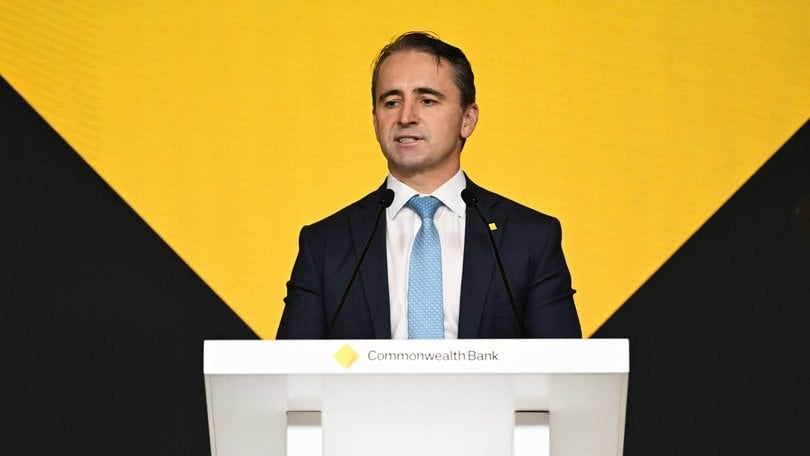
This time, Commonwealth Bank of Australia (CBA) Chief Executive Officer Matt Comyn has stepped into the ring, reversing course from what other major bank CEOs have said about brokers and fraud.
Comyn stopped short of placing the blame on mortgage brokers for suspected home loan fraud, telling a parliamentary hearing that suspicious activity can take different forms across lenders, particularly as technology continues to evolve at rapid pace.
“At any point in time, as whilst banks have existed, there’s a pot of money people seek to extract it," he said. "I think, as I’ve said in many other areas, technology is increasingly playing a role, whether it’s in cyber, in scams, in fraud.
"I wouldn’t narrow it in the way that you did to mortgage brokers; I think there are, at any time, there are different, perhaps, typologies or cohorts of customers where the one that was inevitably, or was reported externally, was where we detected a pattern,” the CBA CEO added.
Comyn's comments come just days after Australia and New Zealand Banking Group (ANZ) Chief Executive Officer Nuno Matos made claims in front of the same parliamentary hearing in Canberra, saying that most mortgage fraud identified in the bank's review came through the broker channel.
In the same week, Westpac Chief Executive Officer Anthony Miller made similar comments when he appeared before the parliamentary committee, suggesting that mortgage fraud had become more sophisticated thanks to the growing involvement of brokers.
“The idea that someone misrepresents so that they can get a loan or a larger loan has been a challenge for the banks forever, and it is a bit more sophisticated now with the brokers,” Miller said. “The other risk that has emerged over the last few years is clearly with the broker having such a more significant role in the ecosystem, brokers facilitating or colluding with that kind of activity is something that we are cautious of."
Market players were quick to shoot back, arguing that brokers should not bear the blame alone.
"Fraud is not a broker-only issue; it is a lending ecosystem issue," said Leo Gagic, chief executive officer of the Finance Broker Association of Australia (FBAA). "We need to be careful about drawing conclusions from absolute numbers without understanding the relative size of each origination channel. Mortgage brokers now facilitate a major proportion of Australia's new residential home loans. The real question is not simply how many suspected fraudulent applications came through the broker channel, but what proportion of applications within each channel actually involve fraud? Without that intelligence, we risk confusing channel size with channel risk.”
Bryan Ong, founder, director and mortgage broker at Adelaide-based Rise High, agreed, pointing to the scale of the broker channel as an important consideration in the debate.
"The banks are not giving the full story because they're talking in terms of percentage," Ong told Australian Broker. "Obviously, mortgage brokers, we write over 80% of volume to the banks and all they're giving is a percentage."
In the June quarter, brokers facilitated 81.6% of all new home loans, according to data collected from research firm Cotality and commissioned by the Mortgage & Finance Association of Australia (MFAA).
Meanwhile, reports began to surface as early as April, suggesting that mortgage fraud had already become a multi-billion-dollar threat to Australia's lending sector. The news put brokers and lenders on alert, and prompted many to take a closer look at how loan applications are verified.
“There is no place in our industry for anyone who knowingly commits or facilitates fraud," said Anja Pannek, chief executive officer of the MFAA. "Where there is evidence of misconduct, we fully support appropriate investigation and decisive action. Individuals must be held accountable for misconduct. At the same time, their actions should not unfairly undermine confidence in the mortgage broking industry as a whole. Fraud prevention is a shared responsibility. Brokers and aggregators have important obligations to identify and respond to warning signs, just as lenders are accountable for their verification processes, credit assessment systems and lending decisions. This responsibility also extends to lenders’ own introducer and referrer networks, which can equally present opportunities for fraud to enter the lending system. Banks ultimately make the decision to approve a loan, and their responsibilities for verifying information and maintaining effective fraud detection controls remain important regardless of how an application is submitted.
"Commentary about suspected fraud cannot lead to broad generalisations about brokers or overlook the responsibilities of other participants," she added. "A loan being submitted through a mortgage broker is not, in itself, evidence that the broker committed or knowingly facilitated fraud."
Larry Kaine, managing partner at Melbourne-based commercial debt-recovery and corporate restructuring firm Corporate Recovery Partners, said arguing over which channel let the fraud through "misses the practical point."
"Once a suspect loan has settled, what matters is where the money went and who can be shown to have handled it," Kaine told Australian Broker. "There's a big difference between fraud coming through a broker and fraud being committed by a broker. The banks are responsible for approving the loans and releasing the money, yet they're pointing the finger at the very channel responsible for more than 80% of their new mortgage business."
The recent remarks from major bank CEOs, however, go beyond Australia's growing fraud problem, with some market players questioning the motivations behind some of the major banks' comments.
"Fraudulent brokers should absolutely face the consequences," Kaine said. "But banks can't outsource the origination of their loans and then outsource accountability when something goes wrong. It raises a fair question: is this entirely about fraud prevention, or is fraud becoming a convenient argument for reclaiming the mortgage market?"
Ong added: "At the end of the day, the banks are acting in the interest of their shareholders, not the clients, and their whole purpose is to maximize shareholder values, which is to try to cut costs where they can. There's no perfect mortgage broker industry out there where there are no cowboy brokers at all. There will always be mortgage fraud. But I think the reality is that Australians trust mortgage brokers more than the banks themselves, which is reflected in the statistics in terms of the volume that we write."
The broker also noted that artificial intelligence is "definitely" part of the problem.
"It's quite easy for anyone to just go and get AI and type into ChatGPT or Gemini or whatever and say, make me a payslip with an ABN and my company name and increase the hourly rate by $5," Ong said. "But I think the good brokers are definitely doing their part in terms of minimizing fraud. One thing that we've been doing on our end is that we have a dual verification of income. Rather than just looking at payslips, we either verify them across the payslips plus their bank statements to verify that credits are actually going in, or we couple that with an income statement from the Australian Taxation Office (ATO) portal, which is something that people can't make up generally."
Daniel Green, founder, director and mortgage broker of Queensland-based Green Finance Group, agreed that there is fraud across every industry. "It's not specific to brokers," he said.
But Green also added that in some cases AI is helping uncover fraud.
"We've got a lot of AI tools that good businesses are using to detect fraud, and the banks are getting good at this too," he explained. "So you've got that on the AI side, some are actually creating some of this fraud. But hopefully the new systems that are being put in place will detect that fraud as well. So I suppose it's a race to see who can outwit each other."