The Gold Coast has overtaken Sydney in unit prices – a milestone that cements its transformation from an affordable coastal alternative into one of Australia’s most in-demand property markets.
According to Ray White Chief Economist Nerida Conisbee (pictured), the Gold Coast’s median unit price now sits at $956,000, edging ahead of Sydney’s $927,000.
“The Gold Coast now has a higher median unit price than Sydney, an extraordinary milestone for a market once seen as an affordable coastal alternative,” Conisbee said.

The surge in apartment values highlights strong demand across southeast Queensland, supported by population growth, easing interest rates, and tight housing supply.
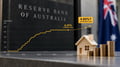
Gold Coast house and unit prices are climbing again after briefly slowing mid-year. Three RBA rate cuts so far in 2025 have lifted borrowing capacity, and markets are now pricing in a possible fourth in November.
“Migration continues to be a major factor. The region is attracting new residents from across Australia and overseas, drawn by lifestyle, climate, and improving infrastructure,” Conisbee said.
Population growth in the Gold Coast and broader southeast Queensland remains among the fastest in the country, yet new housing construction is lagging far behind demand.
“The last time we saw enough homes built in Australia was in 2007, and the backlog has only grown since,” she said.
The Gold Coast’s luxury development wave is reshaping the skyline and driving record price growth along the coast.
Neoval data shows Main Beach now leads the city, with a median unit price of $1.73 million following an $880,000 rise over the past decade. Burleigh Heads and Palm Beach follow closely, up $760,000 and $740,000 respectively.
In Currumbin-Tugun, median unit prices have jumped 134%, or $740,000, in 10 years.
Suburbs including Miami, Coolangatta, Mermaid Waters and Paradise Point have each recorded gains of $670,000–$700,000 since 2015, underscoring the broad strength of the city’s coastal corridor.

Demand is being driven by downsizers and interstate buyers from Sydney and Melbourne seeking waterfront living and lifestyle upgrades. Developers have responded with a wave of high-end apartment projects featuring resort-style amenities and spacious layouts – a hallmark of the modern Gold Coast skyline.
However, affordable construction remains difficult. High building costs and planning constraints mean new stock under $750,000 is now almost impossible to deliver without incentives, Ray White reported.

Investor lending in Queensland has reached record levels, with the Gold Coast a key beneficiary. Rising rents and tight vacancy rates continue to attract investors seeking both income and capital growth.
At the same time, first-home buyer activity is rising, supported by government grants and lower borrowing costs. Many buyers are converting smaller holiday apartments into permanent homes, giving some coastal areas a more established residential character.
“Areas once dominated by short-stay accommodation now have a more permanent residential feel, adding new depth to the market while tightening the supply of holiday rentals,” Conisbee said.
Despite strong demand, the Gold Coast faces an ongoing supply shortfall. High construction costs, limited land and stretched timelines continue to hold back delivery, even with further rate relief likely.
“Even with further rate relief, it is unlikely that supply will accelerate quickly enough to ease pressure on prices in the short term,” said Conisbee.
The Gold Coast’s median unit price now leads the nation, and that dominance is expected to continue. While growth may moderate as more projects complete, the imbalance between supply and demand will remain the defining feature of the market through 2026.
Get the hottest and freshest mortgage news delivered right into your inbox. Subscribe now to our FREE daily newsletter.