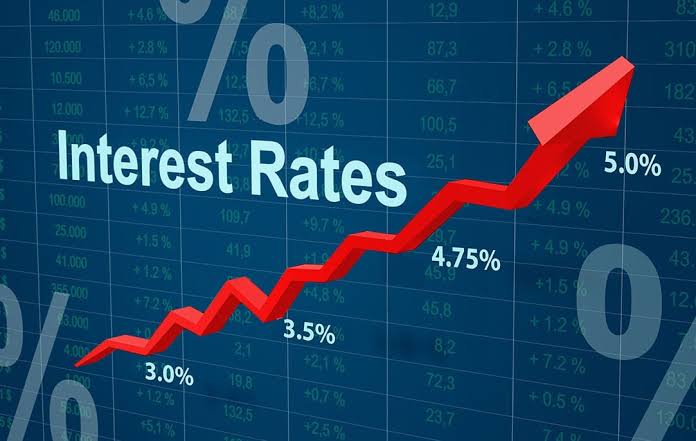
Signs of further rate hikes remain on the horizon, once again leaving markets to weigh up when the Reserve Bank of Australia (RBA) will move.
The most recent comes from the RBA's Chief Economist and Assistant Governor of Economics Sarah Hunter, who on Monday spoke to a crowd in Canberra, saying that the continued conflict in the Middle East, and subsequent higher oil prices, would make inflationary pressures at home worse than they already are.
Oil prices closed at approximately $101.21 USD a barrel the week of 9 September. Prices jumped to $107.63 USD the following day. By the 15 of September, prices had surged to $108.75 USD a barrel, well above the $90 USD mark in July.
“Clearly, prices have tracked up just recently. That is flowing into the local economy,” Hunter said at the Regional Australia Institute’s Regions Rising National Summit. “It’s certainly concerning in the context of what it costs, therefore your energy costs if you’re running a business, what it means for households in terms of the cost of petrol you’re putting in your car and therefore what it ultimately means for inflation, which is what we’re tracking and targeting. So it’s pretty challenging.
"We do think that risks to inflation right now are skewed to the upside," Hunter added. "The conflict [in the Middle East] hasn’t reached a sustainable resolution. We are definitely concerned therefore about what that means for fuel prices and the flow of crude oil and refined products through the global economy."
The news fed into fears that interest rates would likely increase again before year's out, possibly in September.
Earlier this month all four of Australia's Big Four, as well as Macquarie Bank, finally got on the same page, forecasting another rate rise before year's end. But the lenders were divided on timing: National Australia Bank (NAB) is anticipating rates to go up in September, while ANZ, Commonwealth Bank of Australia (CBA) and Westpac have placed their bets on November.
The recent rise in oil prices, along with Hunter’s comments, have once again put the timing of the next hike into question, while also strengthening the case for a September rate rise.
Harry Ottley, an economist at CBA, said the bank still expects rates to remain on hold until November.
"But certainly the September meeting now is quite well priced by financial markets, and there's a very real chance that they can increase rates in September," the economist told Australian Broker. "I think the nail in the coffin is probably that they'll have to raise interest rates again. The question is when, whether it'll be September or November. That's been our base case, in November. But clearly September is a live option."
Ottley added that higher oil prices "are really not helping the overall inflation situation.
"We're obviously seeing these oil prices rise across Australia and across the world," he said. "People are worried about inflation. The higher oil prices are just kind of adding on to that now. So it's looking like rates are going to have to move higher."
While CBA is leaving the door open to a September move, Westpac is forecasting that the RBA will hold off until November.
"We are expecting rate rises in November," said Illiana Jain, Westpac economist. "We think the RBA is going to take their time to assess the data."
One key piece of data will be the Australian Bureau of Statistics' (ABS) next consumer price index (CPI), which is set to be released on 30 September, one day after the RBA's 28 to 29 meeting on monetary policy concludes. Armed with the latest data, the RBA will have more time to evaluate the economic outlook and gauge the flow-through effects of higher costs.
"There is an elevated risk that rate rises will come," Jain said. "We're seeing savings that households have, and at the same time, we are seeing that cost pressures are building for a lot of businesses. But we are expecting that timing to be in November, just because it's going to take a bit more time to start seeing more of that pass-through come into the economy, and the RBA will want to proceed more cautiously as well."