The Reserve Bank of Australia (RBA) has hit pause, at least for now.
In a widely-expected move, the nation's central bank left the official cash rate (OCR) unchanged at 4.35%, following three consecutive rate hikes earlier this year.
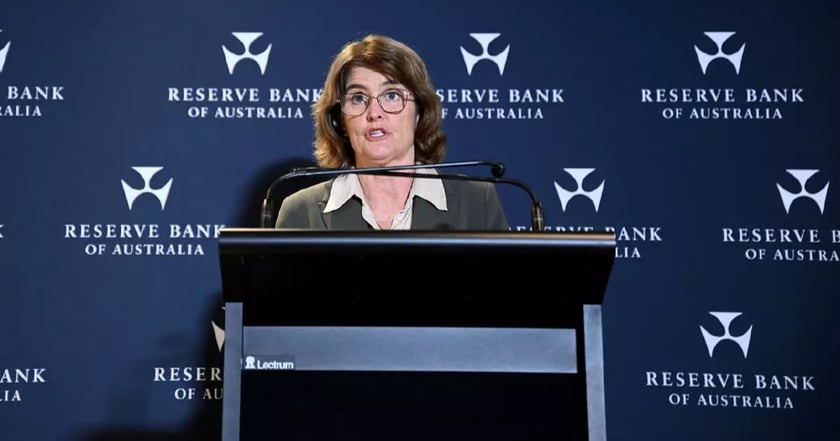
During a press conference Tuesday after the decision was handed down, RBA Governor Michele Bullock acknowledged the strain those increases have had on Australians.
The previous rate rises were "tough for households," she said, but "they were necessary to slow demand, to make sure we get inflation down."
While inflation has eased slightly from recent highs, it remains well above the RBA's target range. Against that backdrop, the board opted to leave rates unchanged as it gauges the impact of earlier tightening.
"Leaving the rates on hold today will allow the board to assess how these previous increases are flowing through the economy," Bullock explained.
She added that "today's decision does not rule out further tightening in monetary policy if that is what is required to get inflation down.
"I want to be very clear that inflation remains too high," she said.
Australian Broker caught up with market participants to hear their thoughts on the decision, and what it means for the current market.
Chief executive officer of Mortgage Choice
"It's not unsurprising that the Reserve Bank made the decision to keep the cash rate on hold. The board is likely waiting for more data to come in to allow them to fully assess what impact the three consecutive rate hikes this year are having on inflation. Today's pause will be a relief for borrowers and give households some breathing room. We are seeing borrowers respond decisively to this year’s rising rate environment, with our home loan submission data showing refinance submissions were up 3%, year-on-year.
The measures announced in the federal budget, combined with home prices holding flat, may create a window of opportunity for hopeful first-time homebuyers looking to get into the market, who could benefit from reduced investor demand."
Executive director at aggregator group Connective
"Today's hold will be welcomed by borrowers. But it won't necessarily feel like relief. Many households are still adjusting to a higher-rate environment and ongoing cost-of-living pressures. This isn't a turning point for borrowers. It's another step in a prolonged adjustment period to navigate the path ahead, and brokers continue to play a crucial role in helping clients understand their options and make confident financial decisions.
Across our broker network, we're seeing borrowers become more focused on planning ahead and making informed long-term financial decisions, rather than simply reacting to rate movements. While confidence is beginning to stabilise, affordability remains a key challenge and many borrowers are looking for greater certainty around the interest rate outlook."
Senior economist at REA Group
"While the RBA remains focused on inflation, and underlying inflation remains above the RBA’s target band, they are comfortable to wait and see how the effects of the interest rate hikes already in place flow through. There are signs household spending growth has slowed down, after a surprisingly strong end to 2025. The housing market has also slowed, with home prices holding flat nationally in May, and modest price declines in Sydney and Melbourne. That softness is likely to continue through the rest of 2026, as the full effect of the rate hikes weigh on borrowing capacity and home prices."
Chief executive officer at Mortgage and Finance Association of Australia (MFAA)
"Following significant interest rate movements over recent years, today's decision provides borrowers with an opportunity to assess their financial position and consider whether their current loan remains competitive. While the cash rate has remained unchanged, competition among lenders remains strong and there may still be opportunities for borrowers to secure a better outcome through refinancing or repricing.”
Business and investment lead at CPA Australia
"A hold on interest rates will be welcomed by many businesses and households, especially those who are already stretched by higher borrowing costs. However, the reality is that cost pressures remain high. Inflation is still persistent across essential goods and services, fuel costs remain volatile and consumer confidence continues to be subdued. Many businesses would have been hoping for a clearer signal that conditions are easing, instead we’re seeing a holding pattern at a time when both households and businesses are still dealing with significantly higher costs than they were even 12 months ago.
When businesses face sustained increases in operating costs, those increases are inevitably passed on. We expect continued cost pressures at the checkout as small businesses try to balance rising inputs with maintaining viability. Short-term relief can help, but it won’t fix a system where businesses are dealing with persistent cost pressures and regulatory complexity.”
Chief economist at Ray White Group
"The decision to hold reflects a Reserve Bank increasingly focused on the balance of risks. Inflation remains too high, but economic growth is slowing, unemployment is rising and confidence remains weak. The bigger concern for the RBA is that economic growth is losing momentum. With the effects of previous rate increases still flowing through the economy, the bank has chosen to wait for clearer evidence before taking further action.
The housing market is already responding to higher interest rates and weaker economic conditions. Sydney is now leading the national downturn, particularly at the premium end of the market where higher borrowing costs and weaker confidence are having the greatest impact. While the budget may help moderate house price growth, it is also likely to place further upward pressure on rents."
Interim chief executive officer at the Finance Broker Association of Australia (FBAA)
"Borrowers should be proactive and not complacent. After multiple rate rises, it’s the perfect time for mortgage holders to pause and review their current situation. Many Australians are unknowing victims of rate creep, where lenders raise rates for existing customers while offering discounted rates to new borrowers. This means [they] could be paying more in repayments than [they] should be.
It's a competitive lending market and many borrowers are unaware they can approach their lender and ask for a rate reduction. If the lender won’t do this — and many will not as they assume you won’t leave — ask a mortgage broker to look at the market and assess your situation and the options available.”
Head of Australian economics at Commonwealth Bank of Australia (CBA)
"From here, we continue to expect the RBA to remain on hold based on our forecasts for inflation and a continued slowdown in economic activity. We continue to expect two rate cuts in 2027 based on our economic outlook with cuts in May and August 2027."
Co-founder of proptech and comparison platform bRight Agent
"As the RBA keeps rates on hold, around 1.4 million [Australian] mortgage holders are walking a financial tightrope that could lead to disaster. If even a fraction of those 1.4 million people in mortgage stress are forced to sell because they can't meet repayments, then you're going to see a disastrous housing market and huge financial losses right around the country. If conditions continue as they are, then you'll see a lot of people losing money through higher interest rates, an inability to pass on higher rents, and potentially more job losses too."
Head of Australian economics at ANZ
"For August, we continue to think a soft activity backdrop will give the board enough comfort to keep the cash rate at 4.35%. That said, the risk of a rate hike in August is not trivial, with the Q2 trimmed mean particularly important for the board. Looking further ahead, with broader signs of an economic slowdown and interest rates restrictive, rate cuts are likely to be the next sequence of rate moves. We have pencilled these in for the second half of 2027 (August and November) with the RBA likely to proceed down that path cautiously."