In a widely-expected move, the Reserve Bank of Australia (RBA) lifted interest rates on Tuesday, bringing the official cash rate (OCR) to 4.60%.
The move on monetary policy brings the cash rate to its highest level since November 2011.
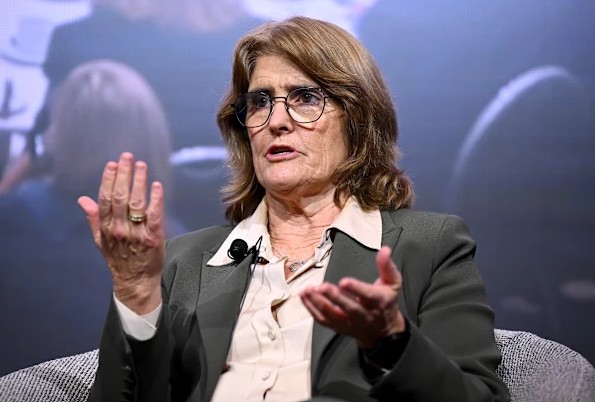
"I know this decision is difficult for households with a mortgage and businesses with loans. But high inflation hurts all Australians, especially the most vulnerable," RBA Governor Michele Bullock told reporters during a press conference Tuesday afternoon. "We need to stop this high inflation. It's critical that we stop expectations for high inflation from becoming embedded in price-setting decisions across the economy, or the problem will only get worse. That's why bringing inflation down is our priority.
"There is nothing I can say, necessarily, to make households feel better in this. I understand that. This is tough," the governor continued. "The board did not take this decision lightly without thinking that. We knew that this was going to hit some people pretty hard. We know this. But we have to do it if we are to bring inflation back down. We need to do it if we're going to bring inflation back down. That's our mandate. And ultimately, in the long run, hopefully in the next couple of years, when we get inflation back down, this will all have been worth it."
The decision will no doubt add more pressure to mortgage holders, businesses and investors nationwide, as the central bank works to bring inflation back within the target band of 2% to 3%, and prevent elevated price pressures from becoming entrenched across the economy.
The July consumer price index (CPI), released in August, offered little relief for markets. While inflation is moderating in Australia, it's still above the RBA target inflationary range. The August CPI print is scheduled to be released the Wednesday following the RBA's decision, leaving the central bank to base its latest monetary policy decision on the most recent inflation data available, which is more than a month old.
Meanwhile, on Tuesday, the governor went on to say that many of the upside risks to inflation that the board has previously mentioned — including the conflict in the Middle East, rapid AI boom and capacity pressures and high demand, which are putting upward pressure on inflation — remain concerning and have raised the possibility that inflation could continue to tick upwards.
Bullock also said while a recession is not the RBA's base case, the board would consider increasing rates again "if that's what's needed to get inflation down."
In terms of the country's chronic housing shortage, Bullock was quick to say she's "not an expert on where we're at with our housing targets. But what I can say is that we have a structural undersupply of housing."
The governor explained that higher inflation and rising construction costs could make it harder for developers to build new homes profitably. At the same time, if house prices are falling or aren't high enough, developers may not be able to sell newly-built homes for enough to cover those costs, which could exacerbate Australia's housing shortage.
"Even before the housing downturn, we were hearing that particularly for higher density, it wasn't economic for developers to build because they couldn't afford the cost of building it; they couldn't sell the houses for the cost of building it," Bullock said. "It's possible the housing downturn may make that worse, particularly in an environment where we're observing the cost of building materials rise quite substantially. There's a possibility that that might be a risk to housing. So, I mean, it's a concern."
Throughout the hour-long press conference, Bullock repeatedly returned to the conflict in the Middle East, highlighting its impact on inflation and the broader Australian economy.
"The Middle East conflict — and I've said this before but I'll say it again — the Middle East conflict has been a big shock and it's made us all poorer in this country. That is a fact," Bullock said. "When this conflict first started, everyone was sort of thinking, 'oh, it'll probably not last very long.' Well, that's clearly not true. It's lasted and there doesn't seem to be any end to it. That means that fuel prices, fertiliser prices, transport prices, all these things now are permanently higher. So this idea that they would go up and then come down again just hasn't happened.
"The challenge with that is that the longer [the conflict] lasts — if businesses were thinking, 'oh look, it'll come off. I won't pass on costs,' — the longer it goes, the more likely it is that businesses will just try to pass through the cost increases."
Bullock also emphasised that the conflict in the Middle East wasn't the only reason for interest rates hikes.
"I want to make that clear," she said. "This isn't all about the Middle East conflict. It is making things much worse, but we did start from a position of excess demand anyway, and that's why we started raising interest rates even before the conflict started. But it's made it worse, and the longer it goes on, I think the more challenging it is to keep inflation expectations grounded at a level lower than what inflation is at the moment."