The Reserve Bank of Australia's (RBA) September meeting minutes are out, leaving market players to wonder the direction of the central bank's next move.
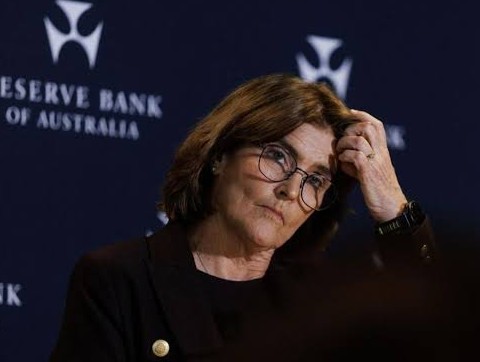
Following last month's meeting, RBA Governor Michele Bullock struck a relatively dovish tone, appearing to emphasise the board's efforts to balance persistent inflationary pressures against the need to sustain economic growth and employment.
Acknowledging the potential flow-on effects of higher borrowing costs, Bullock told reporters after the RBA announced a rate increase that lifted the official cash rate (OCR) to 4.60% — its highest level in 15 years — "I don't like the idea of job losses."
But she also left the possibility of another rate hike this year on the table, "if that's what's needed to get inflation down."
Markets, however, were more sceptical after the official minutes were released on Tuesday. With a more hawkish stance, the minutes signaled the board's willingness to accept weaker economic conditions if necessary to bring inflation under control.
"Members acknowledged that the trade-off between inflation and full employment had deteriorated because of global cost pressures," the minutes read. "They confirmed that their strategy was still to return inflation to target in a timely manner, while preserving as many of the gains in employment as possible. However, executing this strategy in an environment of more persistent adverse supply shocks would require accepting slower growth in demand and employment than would otherwise be the case."
The statements suggest that the RBA may be prepared to place greater emphasis on bringing inflation back to target, even if doing so comes at the expense of employment and broader economic growth.
"The minutes were a clear contrast to the messaging by the governor in her unscripted answers in the [September] press conference," Belinda Allen, head of Australian economics at Commonwealth Bank of Australia (CBA), wrote in a note. "A hawkish statement shifted to a dovish press conference where a focus on the lags of monetary policy and the four rate hikes to date were ‘hoped’ to be enough shifted the message.
"The role of the minutes is to explain the decision to lift the cash rate and, as a result, were decidedly hawkish," the economist continued. "But the minutes did not delve into the outlook from here and what the board will be watching next. There has been no communication from the RBA since the press conference and, as a result, there are mixed messages. These recent communications highlight the uncertainty around the path for monetary policy and what would lead to further tightening.
"We still see the cash rate on hold from here, but acknowledge the clear risk is another rate hike from here with November very much live," Allen added.
Brokers, meanwhile, weren't surprised by the RBA's hawkish outlook, some going so far as to say this is part of the board's strategy to reduce consumer confidence, and hopefully rein in spending.
Australian Broker asked brokers on the ground for their thoughts, and if they think another rate hike this November is inevitable.
The following interviews have been edited for grammar and clarity.
Co-franchise owner and broker at Mortgage Choice Coolum Beach and Noosaville
"Unless the government changes its spending policy, then yeah, I think we'll have another rate rise. It's going to come down to government spending. And if the government doesn't change their spending and the trajectory of their spending — if we don't get another rate increase in November — we're likely to get another rate increase a couple of months after that. We're at the mercy of the government really and their spending habits.
But it's impossible to tell this far out. If you look at the RBA rate tracker, on Tuesday they were factoring in a 27% chance of a rate increase. And that was similar to three weeks before the last rate announcement, as well. And then that changed overnight when new economic data came in. So we're not really going to know until like a week out.
The RBA's comments, in their minutes, they're never going to be overly optimistic in the comments, because they always want to keep a lid on inflation and on spending. They're never going to come out and say, 'we've got inflation under control and that's it.' I think especially now where we are in the inflation cycle. They don't want, for one minute, for consumers to think that, 'hey, inflation's under control and that's going to be the last rate increase.' I think we're a long time away, months, before the RBA changes their hawkish response in the minutes of the RBA meeting. It's going to be a long time before we see the RBA say inflation's under control."
Mortgage broker at Sydney-based Home Loan Village
"I've been following the futures markets, and over the last couple of days it looked more like maybe we'd see a rate increase, maybe earlier in the next year. It seems to be kind of bouncing back and forth, the probability of the end of this year, versus the start of next.
The RBA, understandably, would be hawkish. And I can understand their frustration, as well, at the government's inability to really control fiscal policy. But I don't think we'll see another rate rise this year. I think part of the reason why the RBA is being so hawkish is that they're trying to take that confidence level out of the market without having to raise rates at the end of this year. If they're able to depress confidence, then that is in itself somewhat of a lever that they actually have. There are two levers really. The big one is obviously changing rates. But their other one is their minutes themselves: whether they're hawkish, dovish, what their outlook is. If they can reduce confidence a little bit, then that in itself may actually be a helpful variable."
Chief executive officer at Sydney-based brokerage Finconnex Financial
"I hope there won't be another rate rise this year. So many people are already suffering. The market is already down. So hopefully not. But it's not in our hands. It's already tough for so many businesses, people who are running businesses and people who have mortgages. It's already a tough situation for them. Just raising interest rates along, it's not going to help to reduce inflation. The RBA has to look into other things."