Fresh data from Equifax shows a widening gap between large and small business borrowing in the year to June 2026.
Overall business loan demand rose 3.8% year-on-year, though this sat below the 12-month average, while asset finance demand fell 2.4%, extending a cautious trend on capital investment that was already emerging in May.
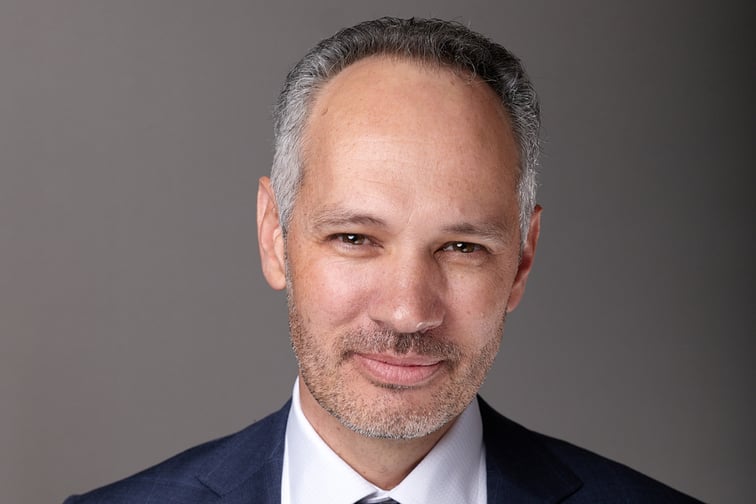
Brad Walters (pictured), general manager of commercial at Equifax, said the figures point to a cooling-off after a period of heavy borrowing.
"After a period of heavy borrowing, possibly to keep up with inflation and rising costs, Australian businesses now appear to be moving into a much more cautious, conservative phase," Walters said.
The pattern isn't new — a similar divide was already emerging in Equifax's May data, with unincorporated small business insolvencies up 9.3% year-on-year even as large corporate insolvencies fell 10%.
That same divide holds in the June data: nationally, large businesses lifted loan demand by 7.8% and asset finance by 1.7%, while SMEs recorded just 0.5% growth in loan demand and a 5.6% fall in asset finance.
Victoria was the only state where SME business loan demand went backwards, down 3.8%, while South Australia posted the strongest SME growth at 5.8%, albeit from a lower base a year earlier.
The divide is starkest within individual sectors: in services, large businesses lifted asset finance demand by 17.1% year-on-year, while SMEs in the same sector saw demand fall 13.7% — a gap of roughly 30 percentage points.
Walters said the split reflects diverging strategies rather than a uniform slowdown.
"It's likely that while big players are scaling up, possibly to capture market share, small services firms are halting new investments," he said.
Trade payment behaviour has also shifted. Equifax data shows 79% of overall debt was paid on time in May, continuing a recovery from a low of 71% in January. Debt paid 31 to 60 days late grew to 10% of overall debt in May, up from 7.4% in March, while severe delinquency, debt more than 91 days overdue, eased to around 8% in May after spiking to 11.3% in April.
Walters linked the rise in short-term arrears to cash preservation rather than distress alone.
"This may be a sign that businesses are intentionally taking a bit longer to pay their suppliers as a practical way to manage their weekly cash flow," he said.
That pressure comes as the RBA has held its cash rate at 4.35%, with the June board minutes striking a hawkish tone, and the RBA reiterating it would raise rates again "if necessary."
The data also points to a widening gap in personal finances. Equifax found SME owners carried mortgage debt roughly 50% higher than non-SME owners nationally, with average balances of $585,000 compared with $379,000 in May 2026.
Personal mortgage delinquency rates were also four basis points higher among SME owners than their non-SME counterparts, pointing to added financial pressure for brokers to consider when assessing this borrower segment.
Walters said the strain facing small business owners is now showing up in their household finances too.
"Financial pressure facing small business owners has now followed them home," he said, adding that some owners may be "making tough choices, possibly delaying their own personal mortgage payments to keep their businesses running."
Get the hottest and freshest property and mortgage news delivered right into your inbox. Subscribe now to our FREE daily newsletter.