Australia's large businesses are borrowing more and failing less — but their smaller counterparts are heading in the opposite direction, with SME insolvencies rising, delinquencies spiking, and ATO defaults surging, according to Equifax's May 2026 Business Market Pulse.
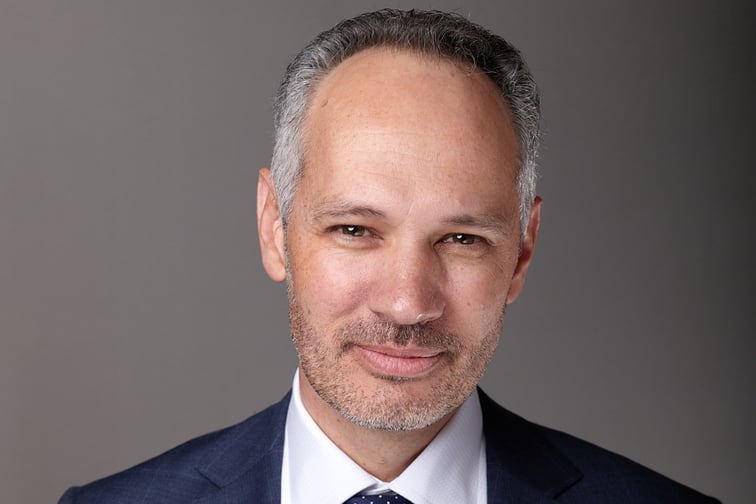
"The May Equifax Business Market Pulse highlights growing pockets of stress among the Australian business credit landscape, as well as pockets of resilience amid economic headwinds," said Brad Walters (pictured), general manager of commercial at Equifax.
At the headline level, national demand for large business loans rose 15% year-on-year in May, with SME business loans also climbing 9.1%. But the asset finance picture tells a more cautious story — applications fell 2.1% for large enterprises and 4.1% for SMEs nationally, suggesting capital expenditure decisions are being deferred.
Walters noted that "organisations of all sizes are exercising caution before committing capital to major upgrades in the current economic environment."
The divide between large and small becomes sharper when insolvency data is overlaid. Large corporate insolvencies under ASIC fell 10% year-on-year in April — but unincorporated small business insolvencies under AFSA rose 9.3% over the same period.
Walters described the divergence plainly: "...watching this gap widen shows the real pressure building at the grassroots level of the economy."
Victoria stands out as the weakest state, with large business loan growth of just 1.7% and SME loans dipping 0.7% year-on-year — the only state to record a decline in SME lending demand.
NSW led large business loan growth at 11.7%, while SA matched the national large business figure at 15%, though Equifax noted both SA and WA figures improved over a low baseline from May 2025.
The most striking data point in the report is the jump in severe payment delinquencies. Debt overdue by 91 days or more spiked to 11.3% of overall market debt in April, up sharply from around 8% in March — the highest level since April 2025.
The vulnerability is not new — Banjo Loans' SME Compass Report found half of all SMEs could run out of cash within six months if revenue stopped, even though 69% hit their revenue targets in 2025 — a fragility the latest Equifax data suggests is now becoming visible in payment behaviour.
That pattern extends to tax obligations — new ATO tax defaults surged 47.9% year-on-year in May.
Walters said the data points to businesses "delaying their tax obligations to keep cash on hand" — a classic sign of cash flow stress heading into the second half of 2026.
The stress is already reshaping who is approaching brokers — Equifax's Q1 2026 data showed high-risk SMEs credit shopping at nearly three times the rate of low-risk firms, with sub-prime credit enquiries running at 33% versus just 7% for low-risk counterparts.
For brokers writing commercial and business loans, the practical implication is a pipeline that increasingly skews toward higher-risk applicants — where credit assessment and lender matching matter most.
Get the hottest and freshest property and mortgage news delivered right into your inbox. Subscribe now to our FREE daily newsletter.