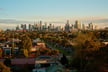
Sydney's homeownership rate has slumped to its lowest level in roughly 70 years, according to new KPMG analysis, as high prices and a persistent housing shortage push more residents, particularly younger buyers, into long-term renting.
KPMG found Sydney's ownership rate — covering dwellings occupied by an owner, with or without a mortgage — fell to 59.9% over the past year, down from 61.1% in 2021 and the lowest reading since the 1950s.
KPMG urban economist Terry Rawnsley (pictured) said the shift reflects a persistent supply problem rather than a lack of buyer support.
"There's lots of schemes like the first home [5%] deposit scheme, which I think is a good one across the country, but the challenge for Sydney is it just hasn't produced enough houses over the last 20 years," Rawnsley said.
Renter numbers in Greater Sydney rose from 703,553 households in 2021 to 786,802 in 2025, an increase of more than 83,000 households, or 11.8%. Over the same period, the share of households renting climbed from 36.8% to 37.9%, meaning almost two in five Sydney households now rent.
Homeownership grew at just 1.6% annually in Greater Sydney in 2025, against 2.8% growth in renting households.
Nationally, ownership rates dipped only slightly, from 66.3% in 2021 to 65.9% in 2025, a decline KPMG attributes largely to Sydney and regional NSW. Western Australia (69.2% to 69.9%) and Queensland (63.9% to 64.9%) both recorded gains, while Victoria held steady at 68.7%.
Rawnsley linked WA and Queensland's resilience to pandemic-era conditions.
"Western Australia and Queensland offered a rare combination during the pandemic: relatively affordable homes, ultra-low borrowing costs, and the flexibility for people to work from almost anywhere," he said, adding that "the data shows affordability is redrawing the housing map."
LJ Hooker head of research Mathew Tiller linked the trend to a persistent gap between housing supply and population growth.
"Since 2021 we've seen mortgage rates rise significantly from the record lows, strong population growth has increased demand for housing and supply of new homes being built, just hasn't kept pace," Tiller said.
Rawnsley made a similar point about Melbourne's relative stability, noting "the owner-occupiers rate in Melbourne held steady as stable housing supply, particularly in Melbourne's greenfield growth areas, was available at price points accessible to first-home buyers."
Tiller added that softer price growth won't necessarily help renters trying to save. "Saving for a deposit if you are a renter is another really challenging aspect of home ownership in Sydney," he said.
Median rents in Sydney climbed to $800 per week in June, reaching $850 per week for houses.
For more information and insights, read the KPMG report and the Daily Telegraph news.
Get the hottest and freshest property and mortgage news delivered right into your inbox. Subscribe now to our FREE daily newsletter.