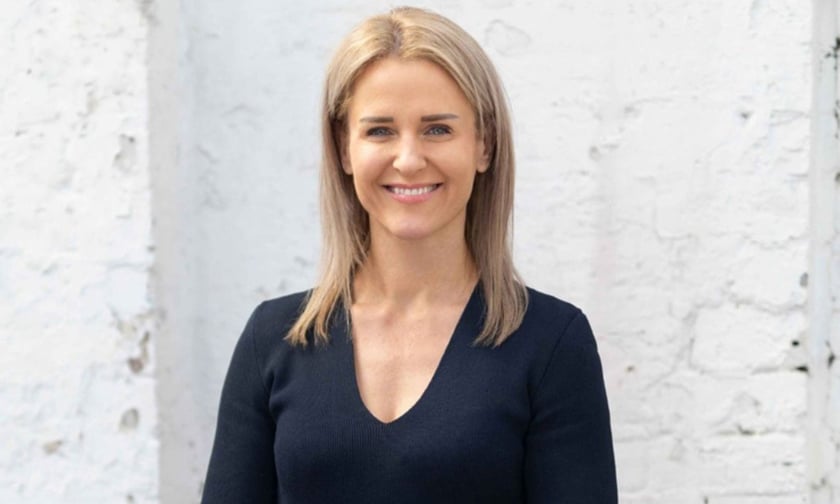
Australia added 412,500 people in the year to December 2025 and completed 172,794 dwellings — a ratio that, on the surface, looks manageable. But Ray White chief economist Nerida Conisbee (pictured) argues the headline number masks significant pressure building in specific markets, with direct consequences for prices, rents, and borrowing conditions.
The analysis cross-references ABS population data with building activity completions to produce a state-by-state read on supply adequacy. At 2.4 additional people per new home completed nationally, the result looks close to balanced — but only if average household size remains at 2.5 people.
Conisbee notes that household size has been declining over time and that migration-driven population growth skews toward smaller households. If household size has fallen to 2.2 or 2 — both plausible given demographic trends — the number of homes required rises to between 187,500 and 206,000.
"On that basis, Australia is not comfortably building enough," Conisbee said.
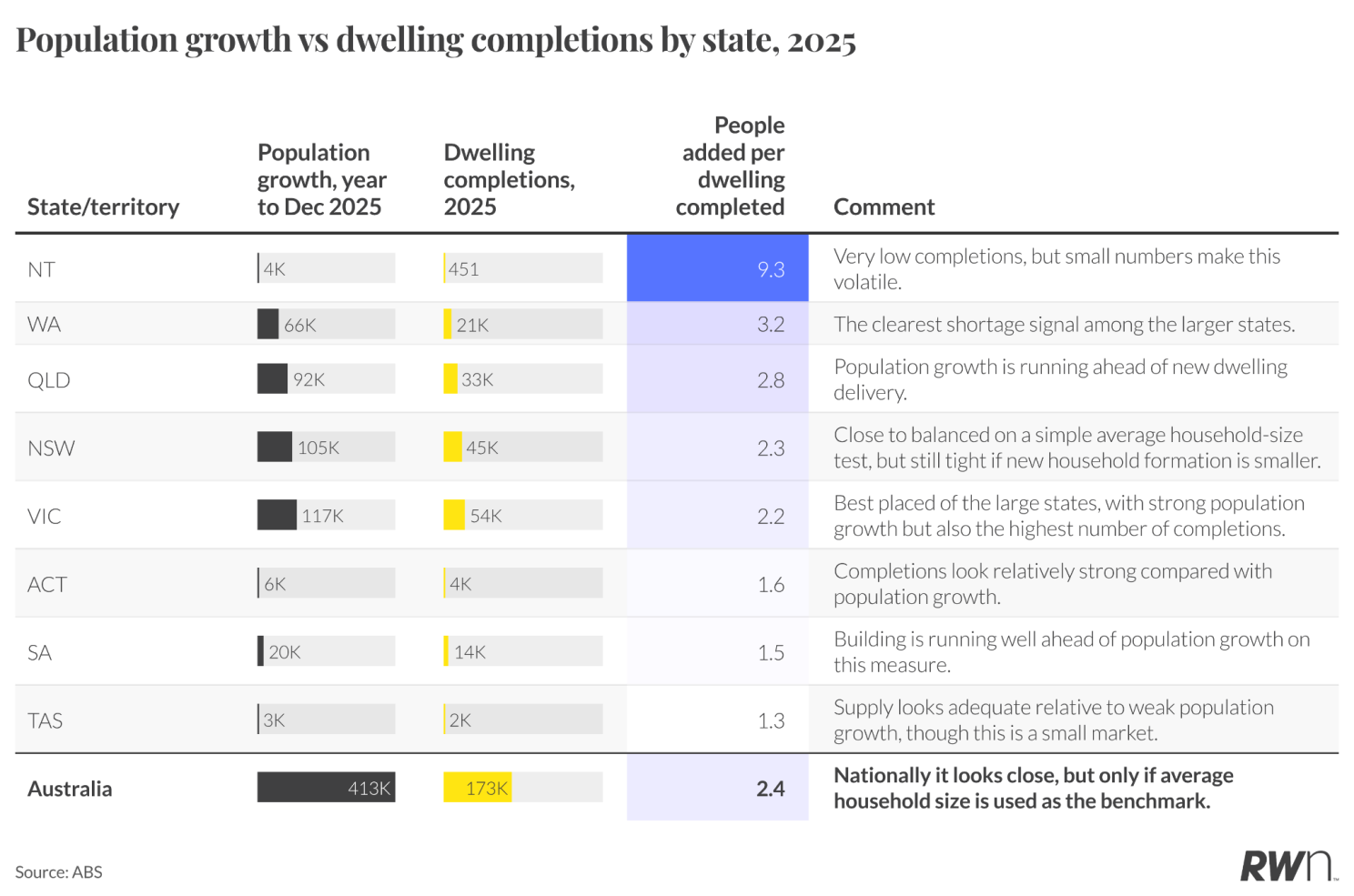
The clearest stress points are Queensland and Western Australia. Queensland added 92,200 people but completed just 32,912 dwellings — 2.8 people per new home. WA was worse, at 3.2 people per dwelling against 65,500 new residents and only 20,597 completions. Both sit well above the national average. The price response has been immediate: Cotality data cited in the report shows WA house prices rose 25.2% over the year and Queensland 17%.
A mid-year housing outlook separately identified Brisbane as carrying the second-largest housing supply gap of any major capital city, behind only Perth.
"Where supply is clearly not keeping pace, the pressure on prices and rents becomes far more difficult to contain," Conisbee said.
At the other end of the table, Victoria completed 54,221 dwellings against 117,300 new residents — just 2.2 people per new home, the lowest of the major states. Annual house price growth in Victoria came in at just 2.0%, a marked contrast to the supply-constrained markets. NSW also performed better than expected, adding 104,600 people against 45,145 completions at 2.3 people per dwelling.
"Sydney still has serious affordability and rental challenges, but on this measure, NSW is much closer to keeping pace than Queensland or Western Australia," Conisbee said.
The pattern is consistent: where completions are keeping pace with population growth, prices are calmer. Where they are not, the pressure is structural and shows no signs of easing.
Read Conisbee’s full analysis on LinkedIn.
Get the hottest and freshest property and mortgage news delivered right into your inbox. Subscribe now to our FREE daily newsletter.