
Australia's property market is pulling in two directions. Sales listings are trending upward nationally, giving buyers greater negotiating power — but the rental sector is telling a different story, with availability shrinking in several capital cities and the pool of renter-clients trying to save a deposit doing so against a backdrop of rising rents and tightening supply.
According to Ray White Group chief economist Nerida Conisbee (pictured), the divergence is the defining feature of the current market.
"Buyers are seeing more choice, while renters are facing a tightening availability problem," Conisbee said.
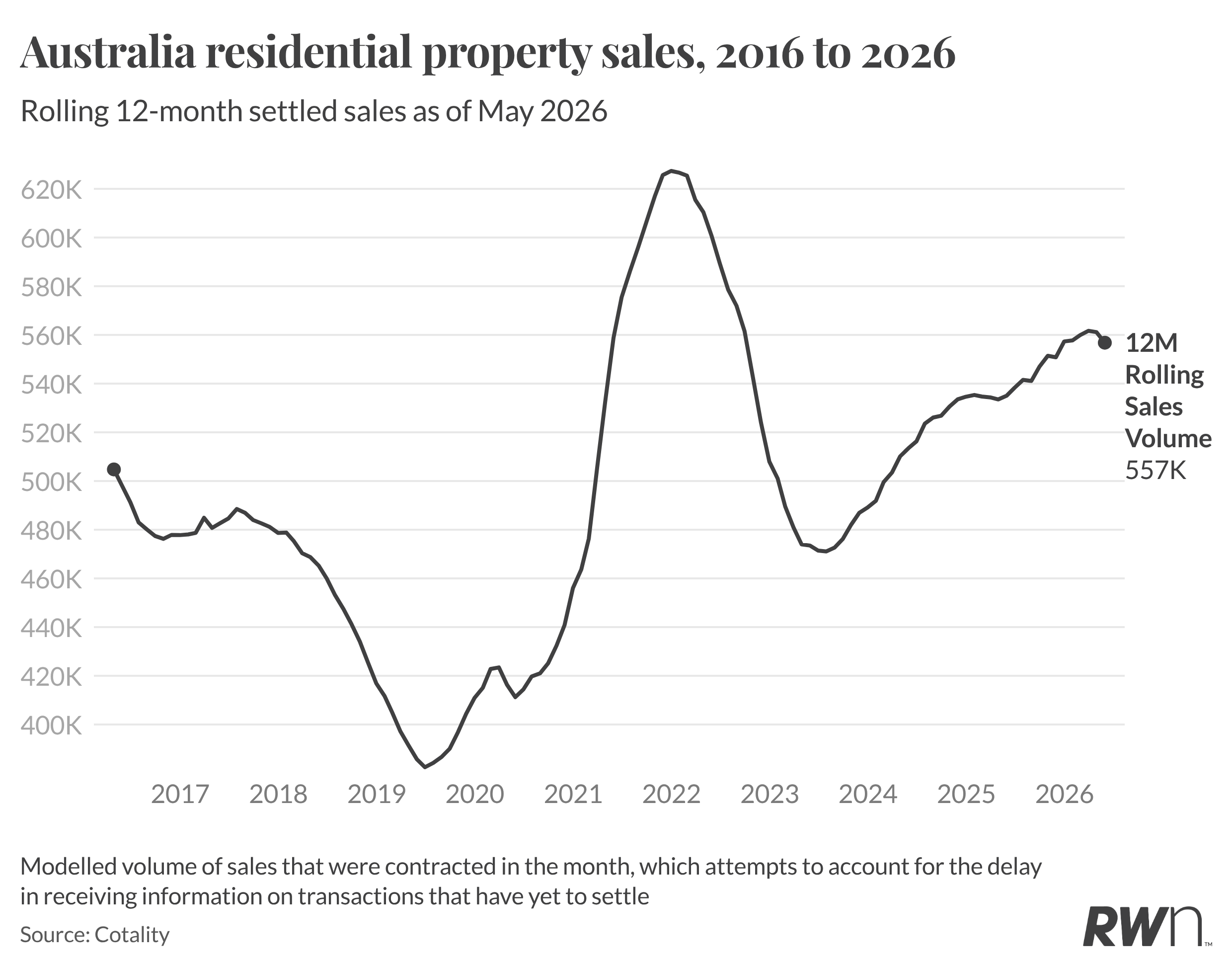
The 12-month rolling tally of active sales listings has reached approximately 607,000 nationally, while new sales listings are around 507,000. Transaction volumes, meanwhile, are not keeping pace — rolling residential sales sit at roughly 557,000 and the trend appears to be easing.
That gap between listings and sales is meaningful: homes are sitting on the market longer, and vendors are increasingly competing for a more considered pool of buyers. Where listings outpace demand, vendors compete harder and buyers gain the upper hand on price.
The uplift in sales stock is not uniform across cities. Canberra has recorded the sharpest annual increase in active sales listings at 7.9%, followed by Melbourne at 5.3%, and Sydney at 2.2%. Conisbee notes the Canberra rise "was already underway before the Federal Budget" — a reminder that some of these shifts predate the policy changes announced on 12 May.
In practical terms, buyers in these three cities are finding more room to negotiate, and price growth in several areas has already moderated as a result.
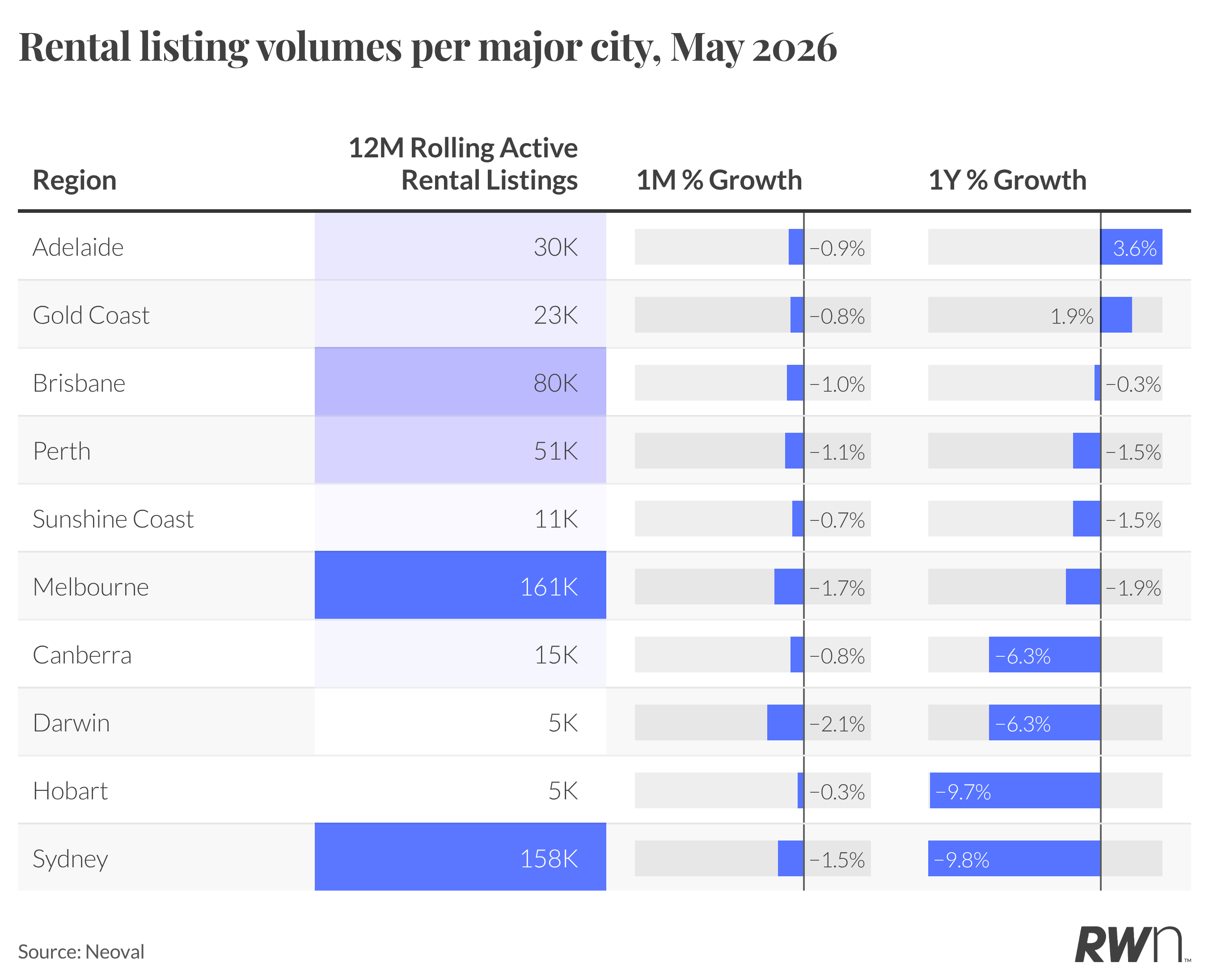
The data is starker on the rental side. Sydney leads the deterioration, with active rental listings down 9.8% over the year and a further 1.5% over the month alone. Hobart, Canberra, and Darwin are also recording sizeable annual falls.
Drill into the national picture and the gap widens. Active rental listings sit at around 697,000, but Conisbee cautions that the longer-term trend shows rentals have not recovered in the same way as sales stock.
"A home listed for sale does not help someone looking for a lease," she said.
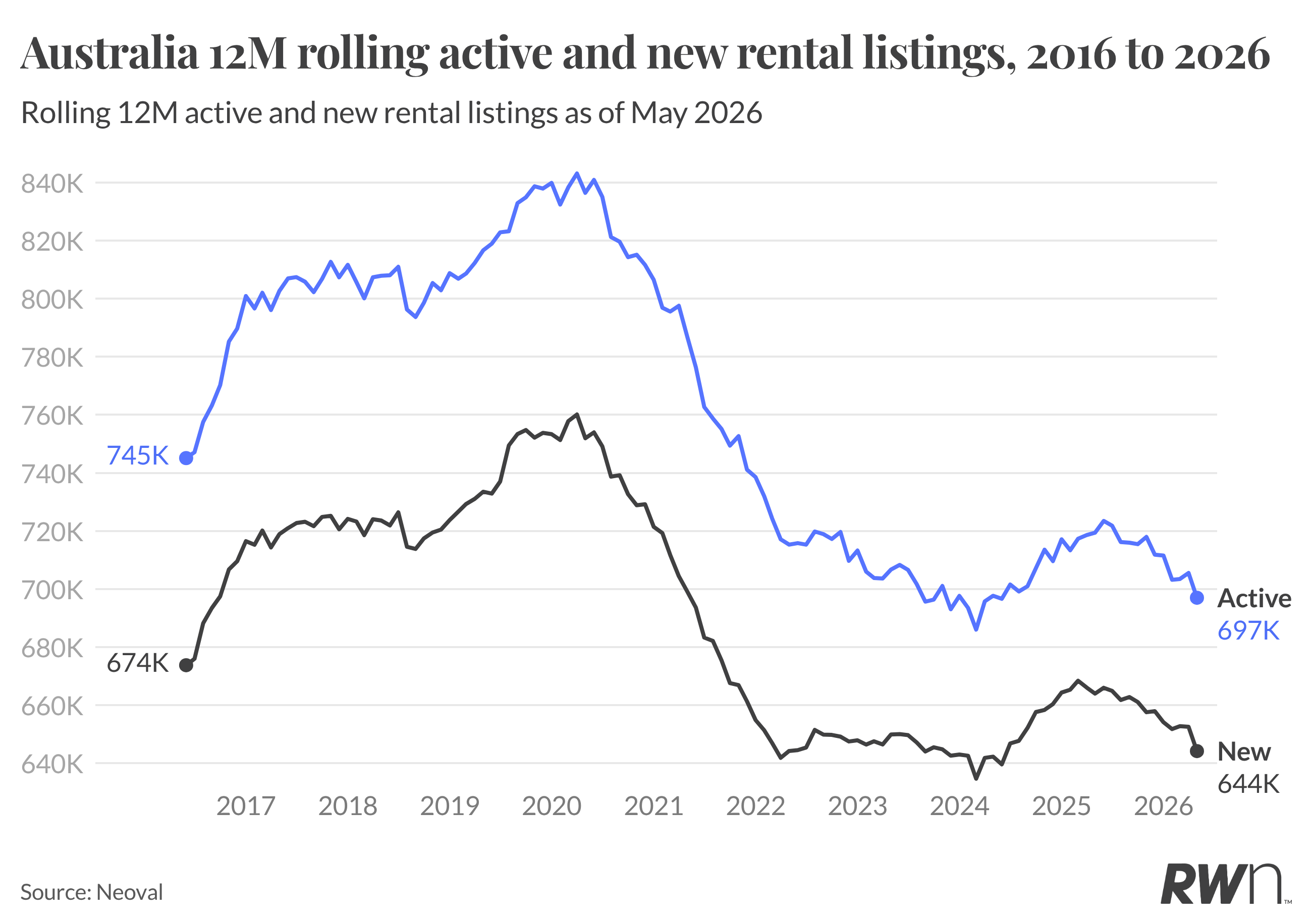
The federal budget aims to shift established homes from investor ownership into owner-occupation — and the rise in sales listings suggests that process may already be beginning. But Conisbee flags the key risk clearly: "If more homes go to owner-occupiers, fewer remain available to rent."
The budget as legislated is narrower in scope than some worst-case modelling, but given that tension was already building before the measures have had time to flow through, the pressure on renters is set to intensify in the months ahead.
The data supports that concern. Westpac forecasts new investor activity could fall by as much as 34% in the near term. Industry modelling warns a full negative gearing removal could cut 45,500 dwelling starts and $3.1 billion from GDP over five years.
For mortgage brokers, the consequences are already arriving at the lending desk. Since the budget, CBA, ANZ, NAB, Macquarie, Great Southern Bank, Suncorp, and ING have all updated their investor serviceability policies, removing negative gearing add-backs for established properties purchased after 12 May 2026.
Get the hottest and freshest property and mortgage news delivered right into your inbox. Subscribe now to our FREE daily newsletter.