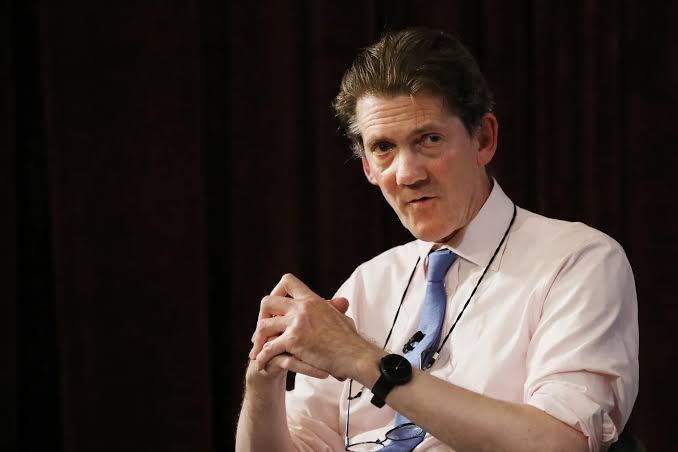
The Reserve Bank of Australia's (RBA) Deputy Governor Andrew Hauser warned that inflation is running hotter than expected, as the central bank faces mounting pressure to bring price growth under control ahead of its next monetary policy meeting.
“The inflation outlook looks materially worse than we projected in the August report,” Hauser said during the Citi Australia & New Zealand Investment Conference in Sydney on Wednesday, adding to expectations that the RBA could once again raise interest rates in November.
The RBA has raised the official cash rate (OCR) four times in 2026, bringing it to its current level of 4.60%.
But inflation is proving stubborn.
The latest consumer price index (CPI) revealed that both headline CPI and trimmed mean inflation are still above the RBA's target inflationary range, and in some cases rising.
In the 12 months leading up to August, headline CPI rose to 4.0%, up from 3.5% in the year to July. Trimmed mean inflation remained unchanged at 3.6%, the same as in June and July. The RBA has remained steadfast that it will not begin reducing rates until inflation is back within the band of 2% to 3%.
But while inflation remains high, there are growing signs that tighter monetary policy is beginning to weigh on the broader economy.
Unemployment continues to rise — climbing to 4.7% in September, up from 4.6% the month before, and marking the third consecutive monthly increase — one of the first indicators that interest rate hikes were starting to slow the economy.
But market players and economists alike were quick to point out that the RBA will likely place little value on the nation's jobs data.
"Even though the unemployment rate has increased slightly to 4.7%, inflation will be the primary factor that the RBA will be looking at when deciding whether to increase rates," said Russel Chesler, head of investments and capital markets at global investment management firm VanEck.
Meanwhile, mortgage holders and investors continue to grapple with reduced borrowing capacities, higher costs of living, a revised budget with fewer tax incentives, falling property prices and a general sense of market uncertainty.
The RBA's September meeting minutes, released in October, did little to tame market fears. The minutes' hawkish tone suggested that the RBA is prepared to place greater emphasis on bringing inflation back to target, even if doing so comes at the expense of employment and broader economic growth.
Hauser's comments on Wednesday offered the clearest window into the central bank's thinking, illustrating the RBA's current dilemma.
"Monetary policy is working," he said. "[The] labour market is easing, consumption growth is quite tepid. But there are still pockets of growth, and the inflation outlook has deteriorated. So that’s a pretty tricky balance.
"The challenge that’s facing the board, and has done for some time, is do you do more to tackle higher inflation, recognising that that means weaker activity, weaker labour market,” he said. “Do you have a dual mandate? Or do we hold our horses to protect the labour market, try and protect some of the labour market … but accept the risk in so doing is that this upside inflation risk embeds, and that becomes more expensive to deal with? Those are hard choices; they’re not where we’d like to be ideally as the central bank."
Brokers on the ground are less optimistic about the RBA's next move.
"I think there will be an increase in November," Niti Bhargava, founder and principal broker at Melbourne-based brokerage GB Financiials, told Australian Broker.
Jo Attard, founder and finance specialist at Melbourne-based Heart Financial, is keeping her fingers crossed for a November reprieve, even as signs point to another rate rise.
"It definitely sounds like another one is coming," she said. "People are definitely worried. And sometimes, when we see the banks increase those fixed rates, we kind of think, 'oh, they're already preparing for another rate rise.'
"There's a lot of more conversations around fixed rates at the moment from clients," the broker added. "They're asking questions around, should I be fixing [my rate] because of another potential rate rise? Unfortunately, all of the fixed rates have now pretty much increased by 35 basis points across the board. So it's not really viable at the moment. I'm telling them to ride the wave and just see what happens."
Gordon MacVicar, co-franchise owner of Mortgage Choice Coolum Beach and Noosaville, said it's too early to tell.
"We're not really going to know until like a week out," he said. "Look at the RBA rate tracker. It was factoring in a 27% chance of a rate increase. And then it changed overnight when new economic data came in.
"But I think it's all going to come down to government spending," he added. "If the government doesn't change their spending, and the trajectory of their spending, I think we'll get another rate increase, in November. And if not then, then in a couple of months after. We're at the mercy of the government really, and their spending habits."
Grant Arbuckle, managing director of Loan Studio, also anticipates another rate rise.
"I don't think we need it. Nor do I want to see it. But I think it will happen," he said. "It still looks like the sign of where the RBA will go, for similar reasons we've seen in months leading up to previous RBA meetings. So I think that we will see another increase, and then I think that's where that'll hold for a little bit after that."