Rentvesting has gone from one of the fastest-growing pathways into the property market to a footnote in the lending data in less than a year.
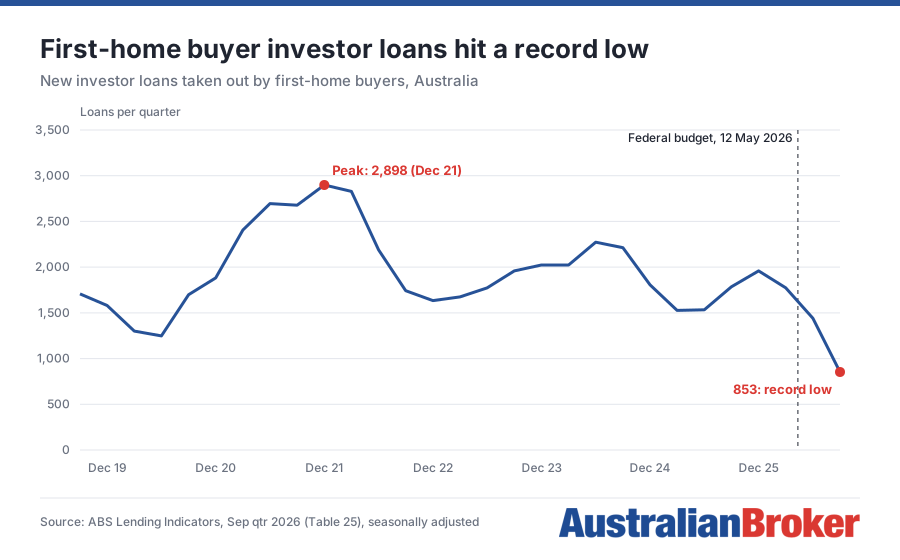
Just 853 first-home buyers took out an investor loan in the September quarter, according to seasonally adjusted lending indicators released by the Australian Bureau of Statistics today. That is a 40.8% drop on the June quarter, a 52.2% fall on a year ago, and the lowest figure since the ABS started publishing the series in September 2019.
The value of those loans fell to $584.6 million, down 36.1% over the quarter and 48.7% over the year.
The slide looks even steeper against the peak. In the December quarter of 2021, more than 2,890 first-home buyers bought an investment property before buying a home to live in. Volumes are now down about 70% from that high.
The turnaround is striking given how recently rentvesting was being talked up. Earlier this year, analysis covered by Australian Broker found investor loans made up a small but growing share of first-home buyer lending, at roughly 5.4%. The year before, ABS figures showed first-home investor loans had risen 12% across 2024 to more than 8,200.
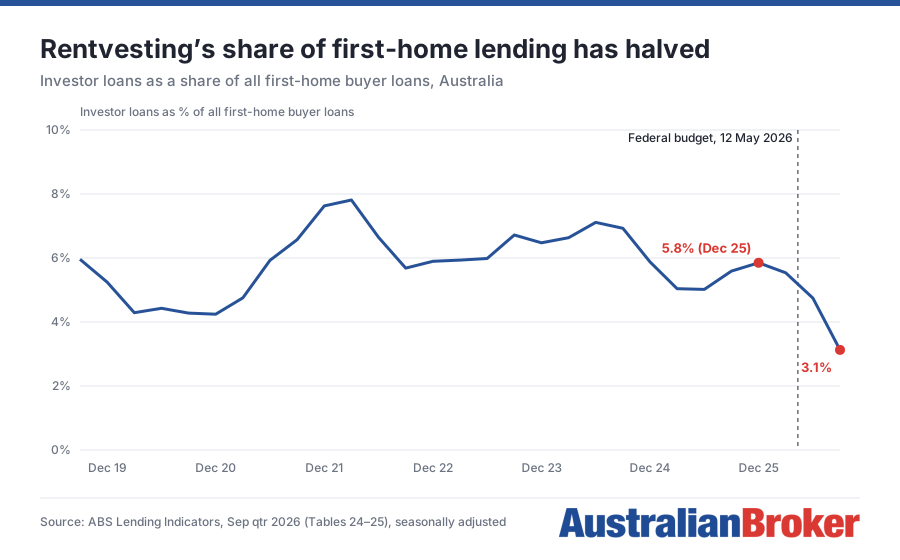
In the September quarter, investor loans made up just 3.1% of all first-home buyer loans. That compares with 5.8% in the December quarter of 2025. Over the 12 months to September, first-home investors took out 5,948 loans, well below the 2024 total.
First-home buyers who plan to live in the property also pulled back, but far less sharply. Owner-occupier first-home buyer loans fell 8.6% in the quarter to 26,415.
Every state and territory went backwards
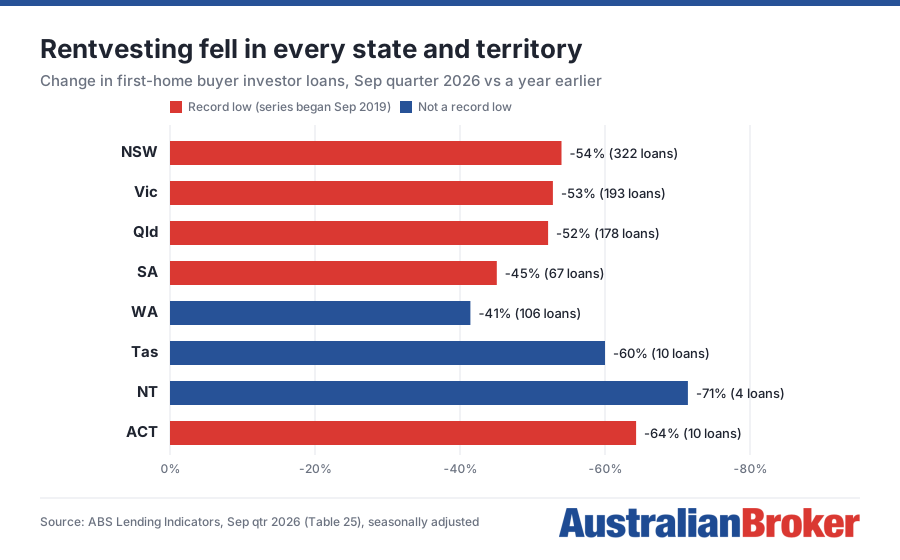
The fall was national. New South Wales, which has long had the highest rate of rentvesting, recorded 322 first-home investor loans, down 54% on a year earlier. Investor loans now make up 4.8% of first-home buyer lending in the state, down from 9% a year ago.
Victoria (193 loans), Queensland (178), South Australia (67) and the ACT (10) all hit their lowest levels on record. Western Australia fell 41% over the year to 106 loans.
The buyers who are still rentvesting appear to be borrowing more. The average first-home investor loan rose to roughly $685,000, up from about $635,000 in June. That suggests the pullback is sharpest among buyers at the lower end of the market.
Timing points squarely to the May federal budget. Established homes bought after 7.30pm on 12 May lose access to negative gearing from 1 July 2027, which means rental losses can only be offset against property income rather than salary. The package passed parliament in June.
That matters even more for rentvesters than it does for most regular property investors. A typical rentvester buys an established unit or house in a cheaper market and relies on tax deductions to cover the shortfall between rent and repayments.
Lenders also moved quickly on the new budget - Macquarie was first to strip negative gearing out of its servicing calculations for new purchases of established property, and the other majors soon followed. For a first-home buyer with one income and no existing equity, losing those add-backs can wipe out a large slice of borrowing capacity.
Rates have added to the pressure. The Reserve Bank lifted the cash rate to 4.6% on 29 September, and lenders have been passing the increase on.
For brokers with a pipeline of young clients who were planning to rentvest, the conversation has changed. Three options now stand out.
The first is to buy new. Eligible new builds keep full negative gearing, so an off-the-plan apartment or house-and-land package can still work as a first investment. The trade-off is construction risk and, often, weaker capital growth than established stock.
The second is to switch to owner-occupier. The Australian Government 5% Deposit Scheme is only open to buyers who will live in the property. Clients who were rentvesting partly to avoid lenders mortgage insurance may find buying a smaller home to live in is now the cheaper route.
The third is to buy established anyway and accept that the property needs to stand on its own numbers. That is a tougher sell with variable rates rising, and it puts more weight on rental yield than on tax.
Whether rentvesting recovers will depend on rates and on how the new tax settings bed in. For now, the strategy that was supposed to be the answer for priced-out first-home buyers has very few takers.