
Australia’s housing market has entered a phase of unexpected acceleration, with prices surging beyond forecasts set at the start of the year.
After a brief dip in late 2024, the national recovery began in January 2025 and has since gathered pace, driven by falling interest rates and constrained housing supply.
“Australia’s housing market acceleration... has exceeded all expectations and is now pointing toward a dramatic reshaping of the national property landscape by the end of 2026,” said Nerida Conisbee, Ray White chief economist.
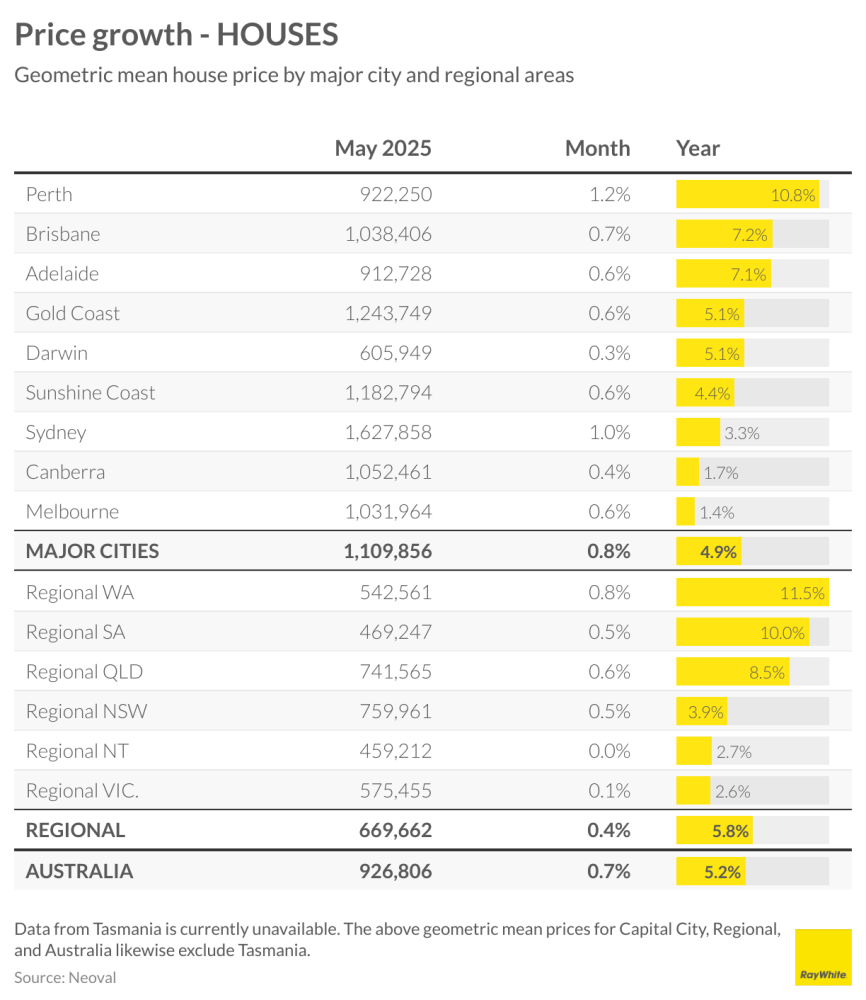
According to new data, national house prices rose 0.7% in May to reach $926,806, marking an annual growth rate of 5.2%. This steady climb sets the stage for major median price milestones across the country.
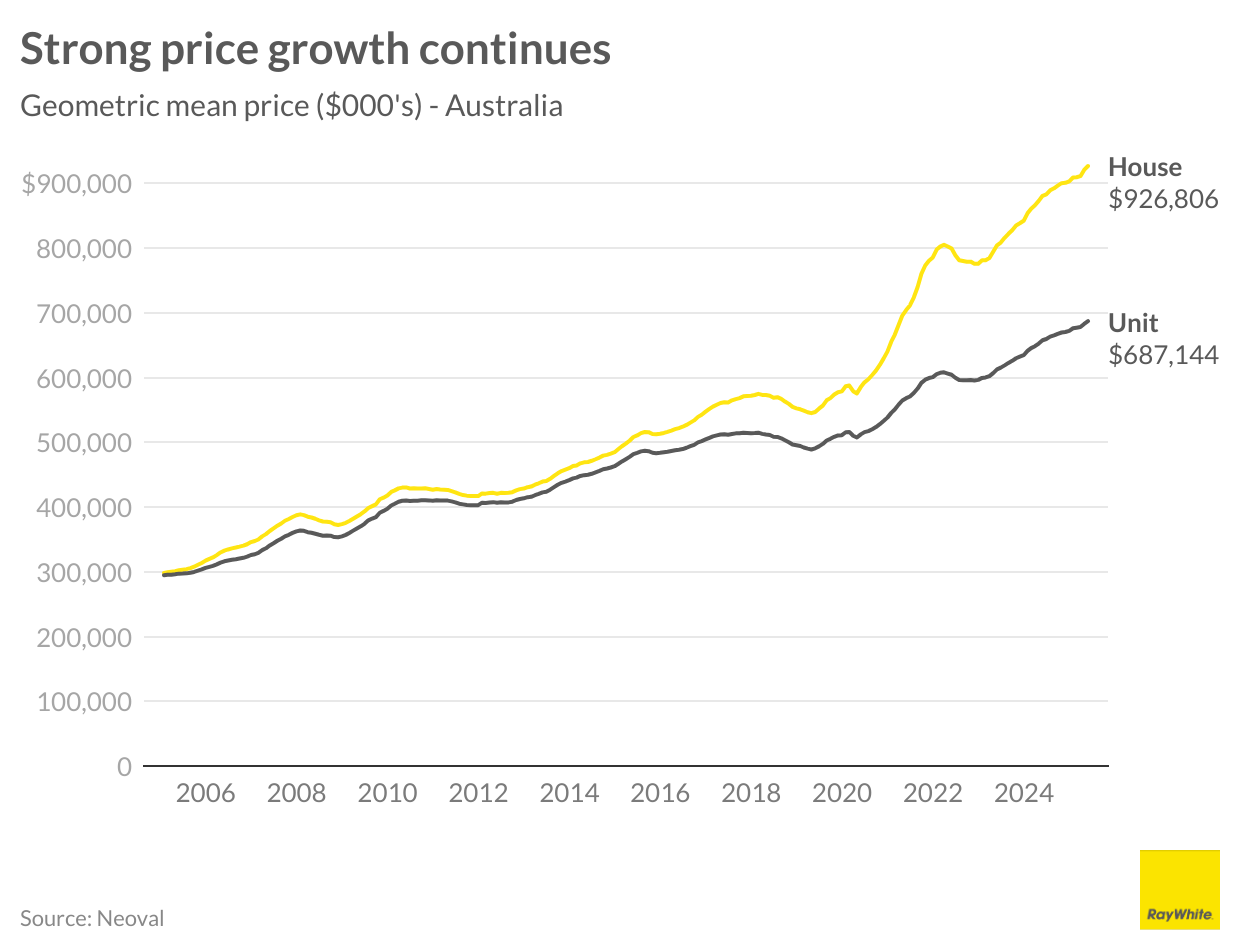
Sydney leads the charge in dollar terms, with the median house price now at $1.6 million. If current growth continues, the harbour city is likely to reach a $2 million median by late 2026.
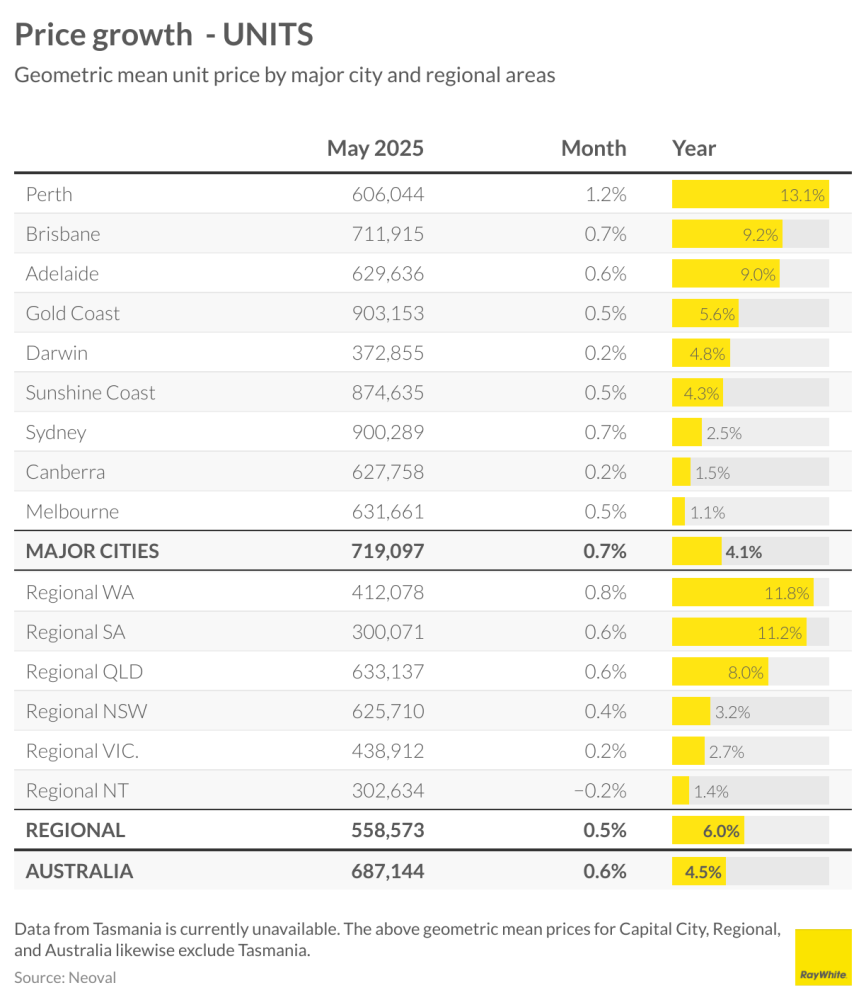
Units in Sydney are also climbing rapidly, with a median value of $900,289, potentially surpassing $1 million within the same timeframe.
“Sydney’s acceleration toward two million dollars continues... hitting a $2 million median seems possible by the end of next year,” Conisbee said.
Perth and Adelaide are closing in on the $1 million median milestone. Perth house prices jumped 1.2% in May, driving annual growth to 10.8% and pushing its median to $922,250. At this pace, Perth could reach $1 million within eight months.
Adelaide also showed strong momentum, with 7.1% annual house price growth and a median of $912,728 – on track to cross the $1 million mark in around 15 months.
Growth is not limited to the capitals. Regional Western Australia posted 11.5% annual growth, while Regional South Australia rose 10.0%, reflecting widespread price pressure.
“Persistent construction challenges continue limiting new housing supply,” Conisbee said. “The construction industry’s ongoing struggles with labour shortages and material costs create supply bottlenecks that cannot be resolved quickly.”
Despite favourable conditions, several factors could temper the current market trajectory.
Conisbee warned that rising unemployment – potentially triggered by global trade tensions – could dampen buyer confidence.
“Rising unemployment resulting from slowing global economic growth triggered by trade tensions could weaken buyer demand, despite interest rate cuts providing some offset.”
While Australia’s jobless rate held steady at 4.1% in April, RBA has warned that global trade risks could put pressure on employment if conditions worsen.
Ironically, today’s high prices may spur developers to restart stalled projects, as improved margins begin to justify construction costs. However, any supply response will take years, meaning tight inventory conditions are expected to persist in the short term.