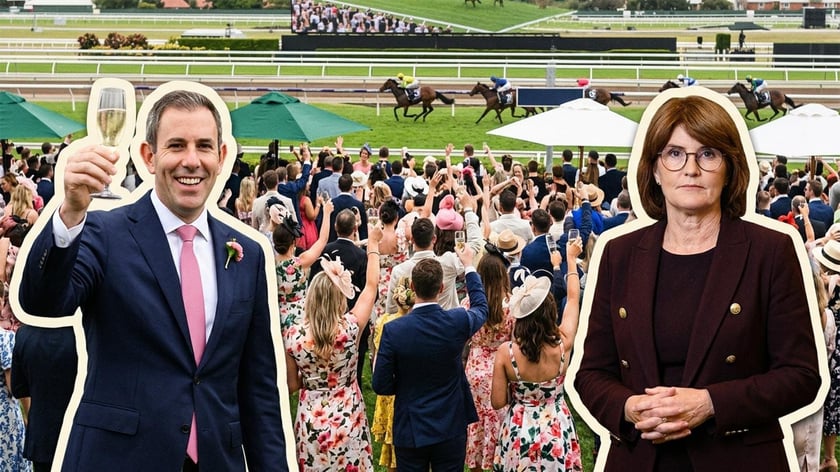
The nation's central bank met Monday and Tuesday of this week for its latest meeting on monetary policy, increasing the official cash rate (OCR) 25 basis points to 4.85%, and placing their bets on Melbourne Cup Day that further rate hikes will help tame inflationary pressures. The move marks the fifth rate rise for 2026 and the highest interest rate levels in 18 years.
The bank cited ongoing inflation as the primary driver for its decision.
"Inflation remains elevated and recent data indicate that it is broadly based," the RBA said in a statement. "The inflation outlook has also been revised materially higher in the updated staff forecasts. This partly reflects higher fuel and other commodity prices affected by the conflict in the Middle East. But domestic capacity pressures are also judged to have been a little tighter than earlier thought. Inflation is now forecast to remain elevated through much of 2027 and is not expected to reach the top of the 2% to 3% target range until late 2027, around three quarters later than previously forecast. This presents upside risks to inflation expectations; some measures are assessed to have risen lately.
"The board is conscious of the period in which inflation has been too high," the statement continued. "Given the revised inflation outlook and the continuing upside risks, the board judged that a further tightening in financial conditions is warranted to support the return of inflation to target."
The decision was majority, with a six-three split.
Few borrowers will be cheering the latest rate rise. But all four of Australia's Big Four banks had already placed their bets on another rate hike at the November meeting.
The latest increase follows the RBA's September decision to lift the OCR for the fourth time in 2026, following stubborn inflationary pressures.
At the time, RBA Governor Michele Bullock left the door open to further tightening, saying the board would consider increasing rates again "if that's what's needed to get inflation down."
"We need to stop this high inflation," she told reporters. "It's critical that we stop expectations for high inflation from becoming embedded in price-setting decisions across the economy, or the problem will only get worse. That's why bringing inflation down is our priority."
Since then, inflation has shown little sign of easing. The August consumer price index (CPI) showed that inflation was still above the RBA's target band. So did the September print.
Headline inflation rose to 4.3% in the 12 months leading up to September, up from 4.0% in the year to August, while trimmed mean inflation came in at 3.6% in September, compared with 3.5% in August. The RBA has repeatedly said it would not consider reducing rates again until inflation is back within the target band of 2% to 3%.
Major banks and futures markets were quick to adjust their expectations for a November rate rise.
Meanwhile, rising unemployment has done little to tame market fears. Neither have comments from senior RBA officials.
During opening remarks to the Senate Economics Legislation Committee in October, Bullock said: "Inflation is likely to remain elevated for some time. Our most recent published forecasts… suggested that inflation would not return to around the midpoint of the target range until late 2027."
That same month, during the Citi Australia & New Zealand Investment Conference in Sydney, Deputy RBA Governor Andrew Hauser said inflation was still "too high," and that "the inflation outlook looks materially worse than we projected in the August report."
The RBA's pointed remarks reflect a broader concern about the direction of the economy.
"What the RBA appears to be worried about is that inflation has been above their target for so long that there's — they say — a growing risk that people and businesses will come to expect that it will remain above their target for a long time. Which history tells them, makes it much more likely that inflation will actually be above their target for a long time," Hobart-based economist Saul Eslake told Australian Broker. "History tells us that if businesses come to expect that inflation will remain high, they will seek to raise prices. Not just to claw back cost increases that they've experienced since they last put their prices up, but to try and get ahead of the cost increases they think are going to occur.
"And similarly, workers will demand pay rises," the economist continued. "Not just to compensate them for the increase in the cost of living since their last pay rise, but to try and get ahead of the cost increases that they expect to occur in the months ahead.
"And the other lesson that history tells us — not just in Australia, but in other countries as well — is that if you do find inflation expectations becoming entrenched at high levels, it will take much bigger increases in interest rates than we've already had in the last four years to bring inflation back down again," Eslake added. "It will take the sort of increases in interest rates that make a recession inevitable."
Despite widespread expectations for another rate rise, the decision is likely to be met with dismay by mortgage holders and businesses alike, many of whom are navigating a number of headwinds, including rising costs of living and escalating supply costs.
"Another rate rise will be a tough pill to swallow for borrowers who are already feeling the pinch," Nick Chong, founder of Sydney-based mortgage advisory firm Rateseeker, told Australian Broker. "A lot of households have been watching every dollar, and another increase in repayments is going to put even more pressure on their budgets. Looking ahead six to 12 months, I think rates will stay higher for longer, and I wouldn't be banking on cuts before mid-2027. With inflation still proving stubborn, we can't rule out further increases either.
"For the property market, I'd expect another speed bump," he continued. "Higher repayments and reduced borrowing capacity will make it harder for buyers to get into the market, particularly first-time homebuyers and those who've recently purchased close to their limit. Investors will also be keeping a closer eye on their cash flow and holding costs.
"For brokers, I think we'll see more clients coming back to review their loans, not necessarily because they're in trouble, but because they want to know whether there's a better deal out there," Chong added. "And with another rate rise, I wouldn't be surprised if more borrowers start questioning whether their current lender is still looking after them."
Thomas Nguyen, senior loan specialist at Sydney-based asset finance and fintech firm LoanOptions.ai, said borrowing demand is unlikely to disappear, regardless of the rate environment. Instead, changing market conditions will reshape how Australians access finance, creating new opportunities for brokers to support clients.
"Another hike won't stop people from buying the car, the utility vehicle or the equipment they need. But it changes how they do it," Nguyen said. "Most asset loans are fixed, so existing borrowers are protected. The squeeze falls on new borrowers, because pricing has already moved on what lenders expect from rates, and on serviceability. A higher mortgage repayment leaves less room on paper for a car or personal loan, so some approvals will get harder and some loan sizes will shrink.
"Moving forward, I'd expect a gentle slowdown rather than a stop," he continued. "People will go for a cheaper vehicle, a bigger deposit or a shorter term, or hold off on the upgrade. Businesses will be choosier, particularly on anything that doesn’t pay for itself quickly. Light commercial sales are already down year on year. Over the next six to 12 months, I’d plan for rates to stay elevated, with cuts unlikely before mid-2027."
While a rate rise is the RBA's tool to help ease inflation, Belinda Allen, head of Australian economics at Commonwealth Bank of Australia (CBA), said another rate rise will cause "economic consequences."
"The economy will be more subdued than we had forecast, home prices weaker and the unemployment rate higher," Allen said. "A more subdued economy will be the cost of bringing inflation back to target in a reasonable timeframe. We are seeing evidence of that economic slowdown already. CBA card spend is slowing, the unemployment rate is rising and sentiment surveys are pessimistic. The RBA has picked a side and is leaning into the fight. As a result, we see the RBA on hold in December and by the time of the February meeting, there should be enough evidence on growth and inflation that sees the RBA on hold.
"Rate cuts are in the cards for late in 2027 if enough progress has been made," the economist added. "We have these pencilled in for August and November. But a large degree of uncertainty remains on timing."